Being Done is SO 2023

So, late last summer, we began building The Beast out — the affectionate name we’ve given for the pantry cabinets at the back of our kitchen.

When all was said and done, it seemed like a no-brainer to paint the cabinets white to match the rest of the kitchen cabinetry and keep things in the low-contrast zone we find ourselves most comfortable. Muddy grey, white, and an occasional pop of black is our jam, baby.

Ikea, for some unknown bizarre reason, does not make matching cabinetry paint. If you get a nick on your cabinet, or if you are trying to match filler pieces to your cabinet, good luck with that. If you have cabinets with color other than white, you may be be able to do a solid color match at your paint store. But, white is a notoriously difficult color to match, even if you bring the whole drawer front into the store.

Never fear, though, we are fortunate to have a consultant on call for just these kinds of dilemmas. His name is Dr. Google and from what we could gather from our research, we are the one billionth person to have this issue. The consensus on the interwebs was to use Behr Premium White in Matte for the closest match possible.

Welp, not the first time Dr. Google has led us astray [remembering that rash on my left ankle which ended up not being early onset malaria, but rather a simple mosquito bite]. To be fair, the color does match fairly well, but the sheen and the finish is all wrong. No one is going to mistake The Beast for something that was factory finished, lemme tell you.
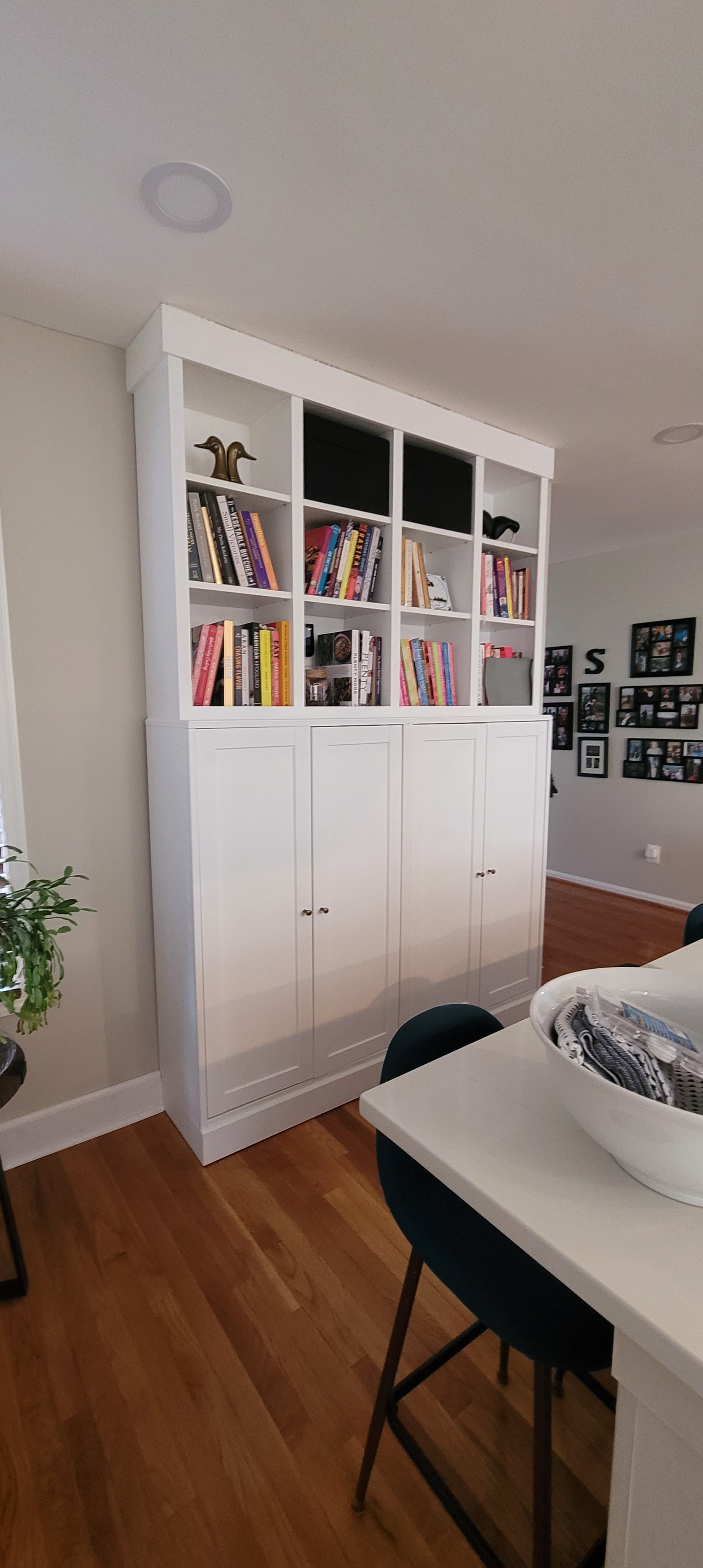
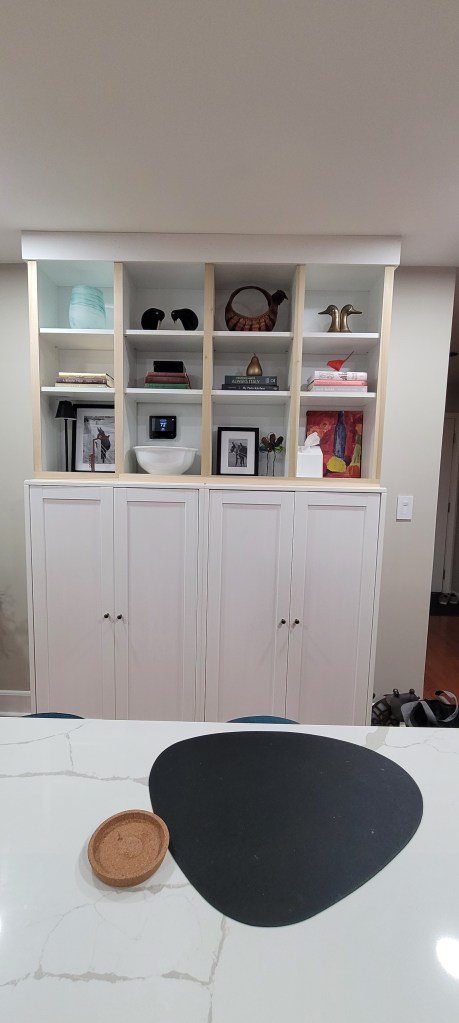
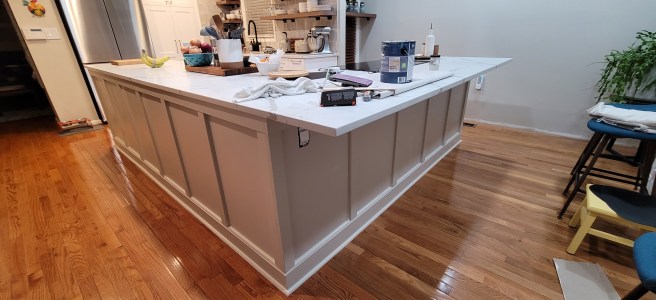
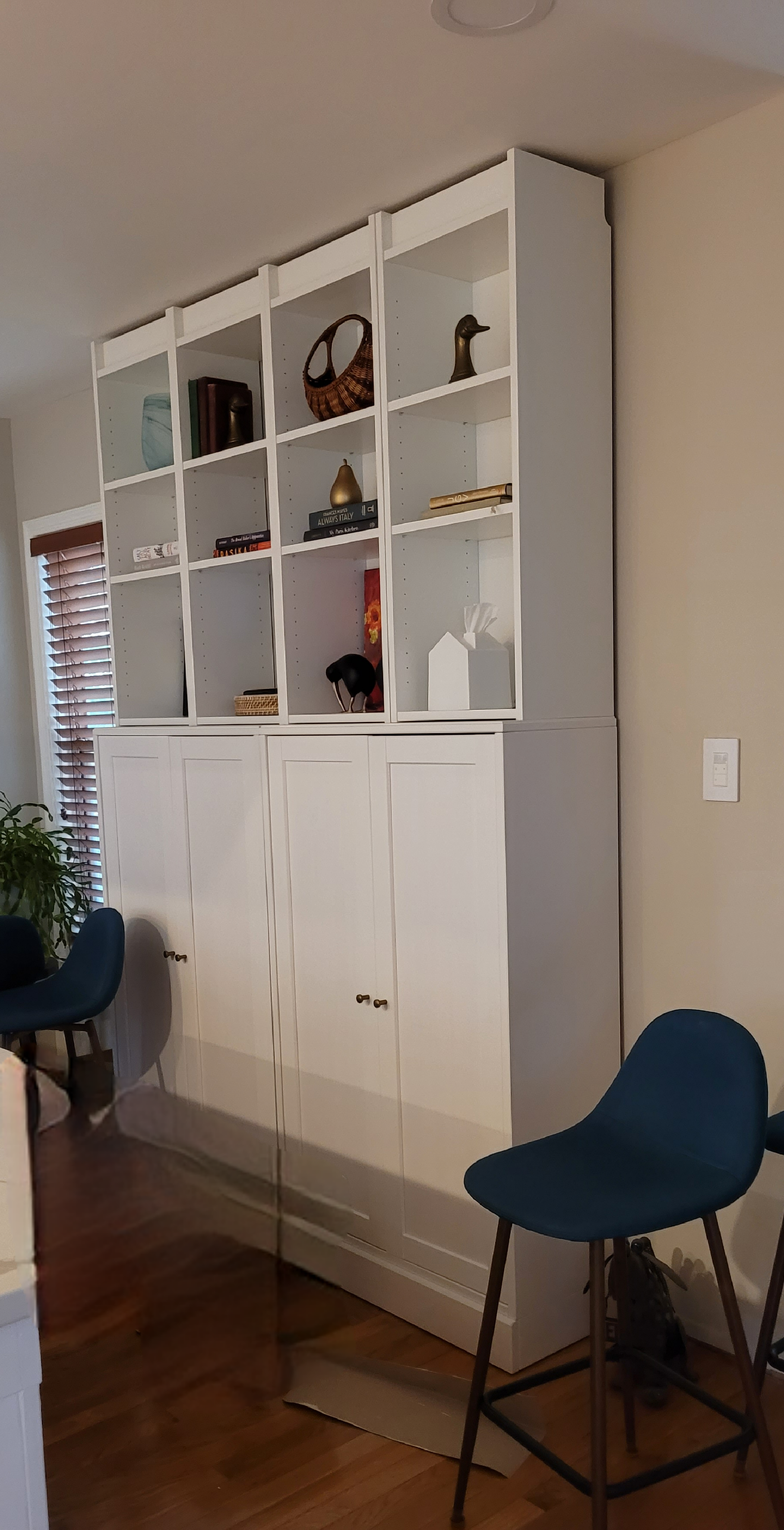
Here she is, all trimmed out and painted

While it doesn’t look too shabby, if we do say so ourselves, something just wasn’t quite right. We couldn’t put our finger on it and decided, since this was the last big thing we had to check off our list for the kitchen reno to be done and dusted, we would live with it for a hot second and see if it grew on us.

So, here we are, many months later, and I think we have figured out the disconnect. The piece is chalky (hello paint), and too white. I mean, the thing could bring home ships in the dark of night. It also gives off hospital clinic vibes – not exactly the aesthetic we were shooting for.

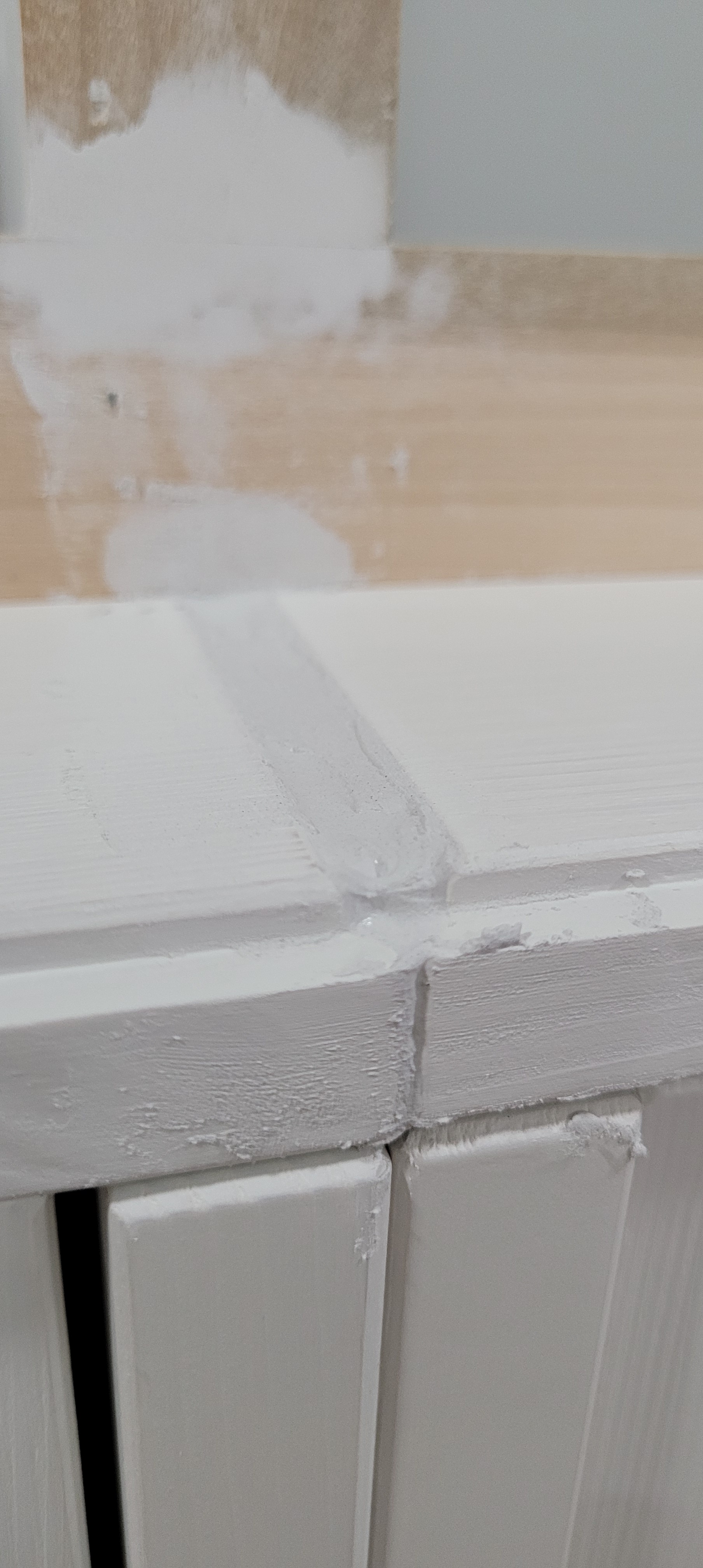
To be honest, we were so tired after a year of reno that we probably would have lived with it forever. But, then, a bad thing happened that ended up being just the catalyst we needed to get back on the reno horse and give it another go. The crown moulding that we had affixed to the top of the unit for that quintessential built-in look started separating from the ceiling!
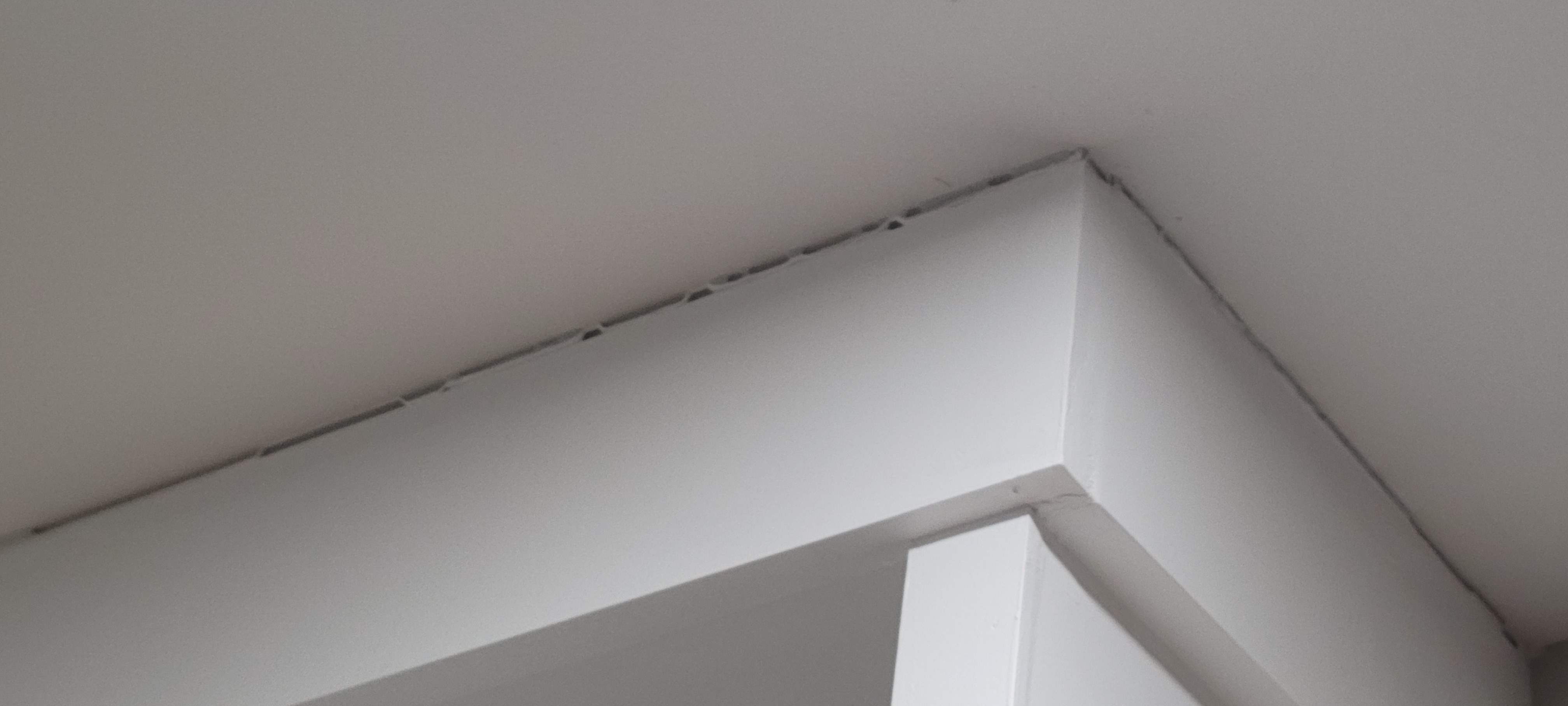
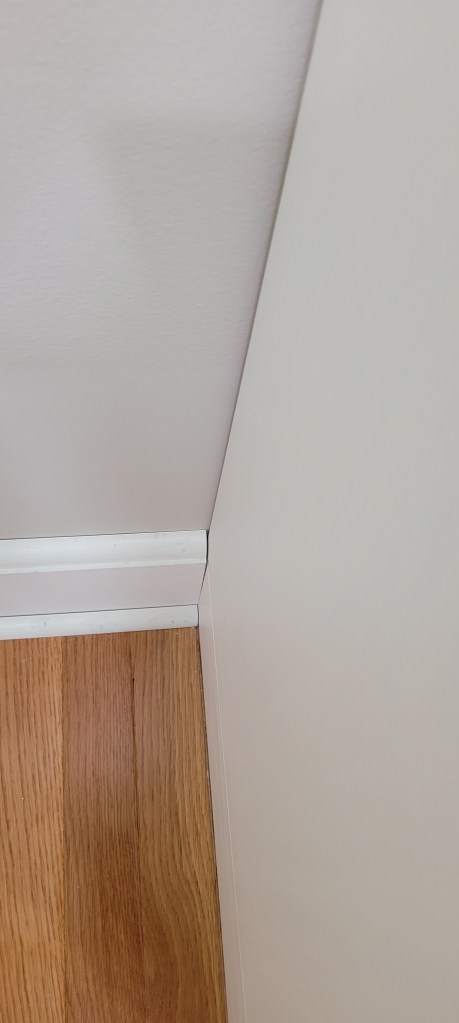
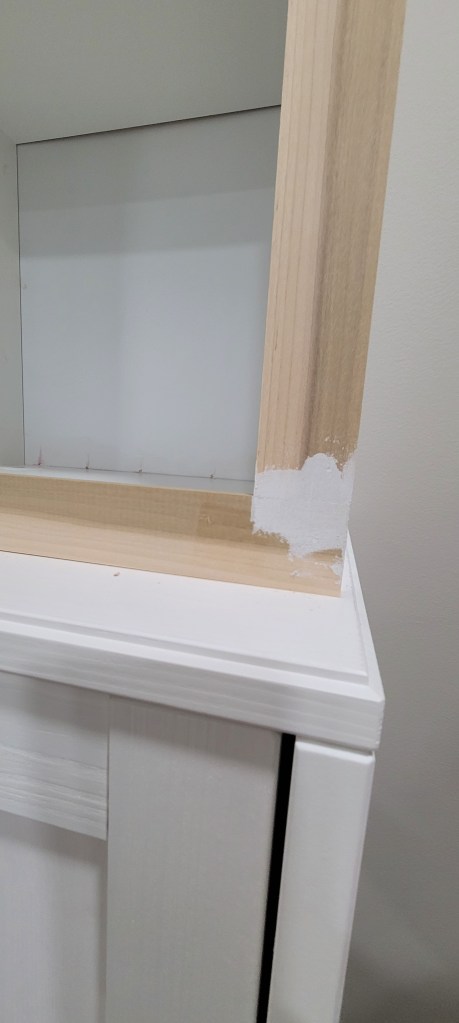
The unsightly black line where the crown separated from the ceiling was our first clue that something was wrong

We had used our go-to stretchy caulk that has always worked wonders for us — and seemingly lasts for years without cracking or splitting. We soon realized where things went south on this piece, though — if you scroll back to the original pictures above, you will see the first easter egg (clue) to what likely caused this blessing-in-disguise tragedy.

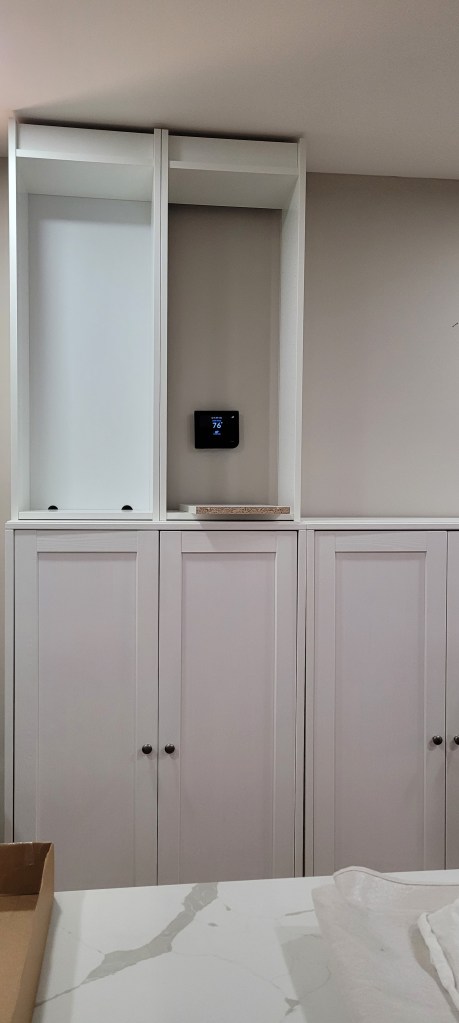
When the piece was originally finished, painted and caulked, we got to work loading it up with all the fun stuff it was meant to house. In the interior cabinets were small appliances and pantry items like canned and jarred goods. In the upper open shelving were a ton (remember that word, your second easter egg of this debacle) of books in my cookbook collection.

And that led us to the culprit.

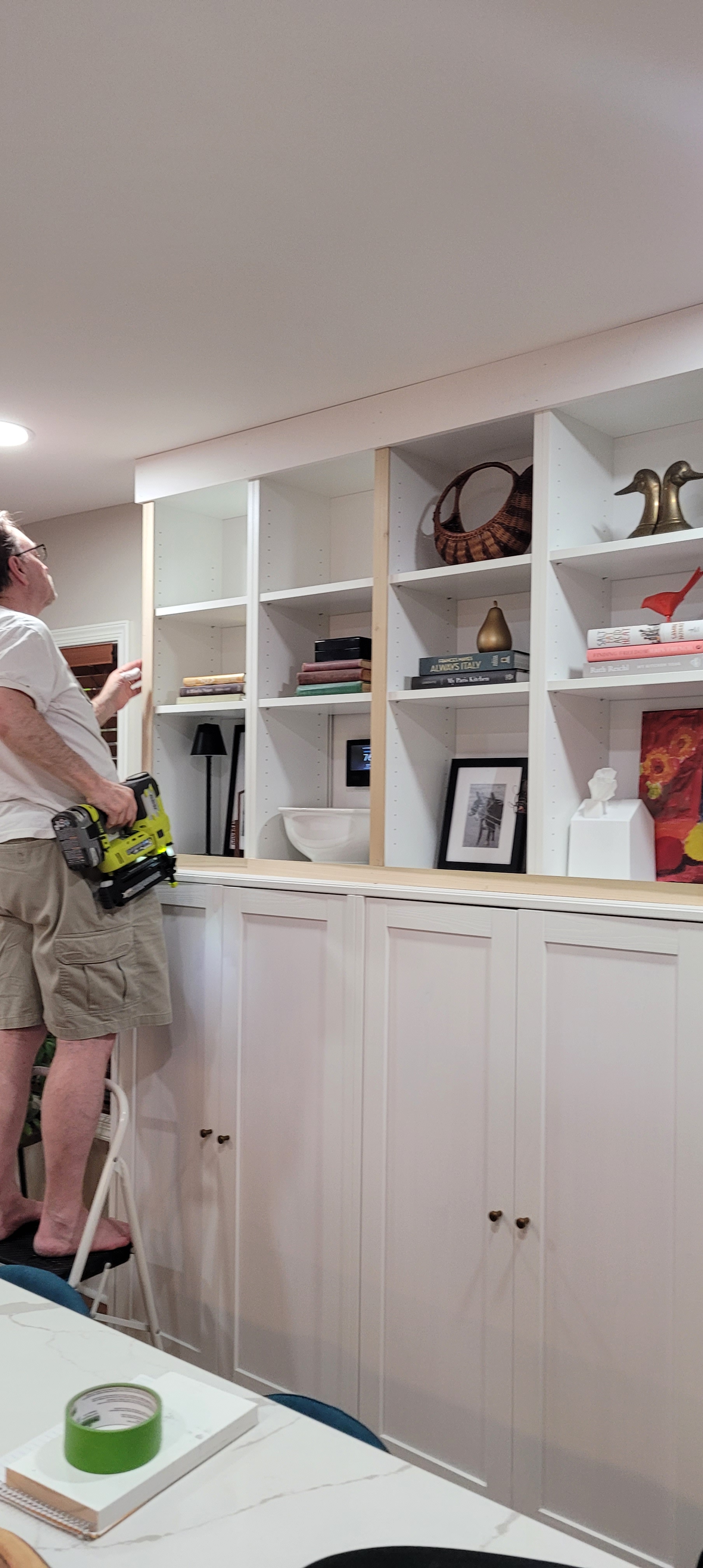
We loaded this thing up after we caulked, and naturally — because gravity — the weight pulled the entire unit down, hence the separation between crown and ceiling.

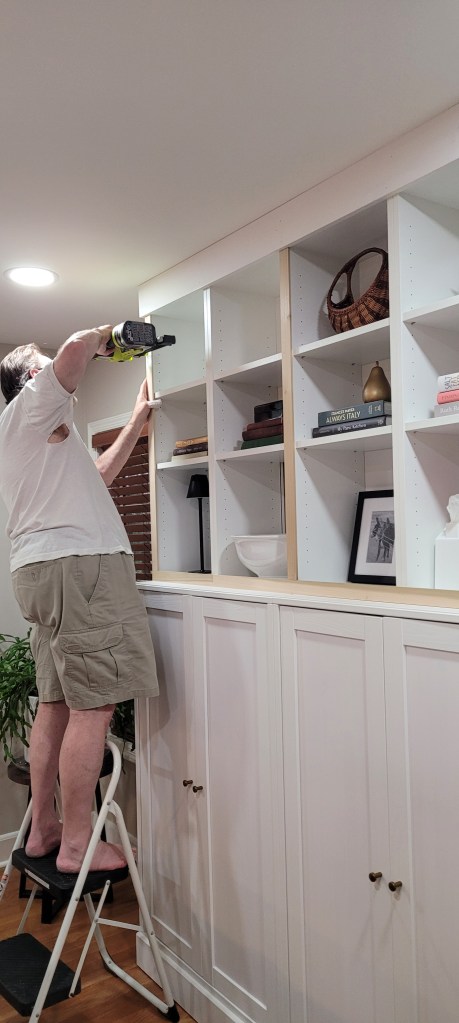
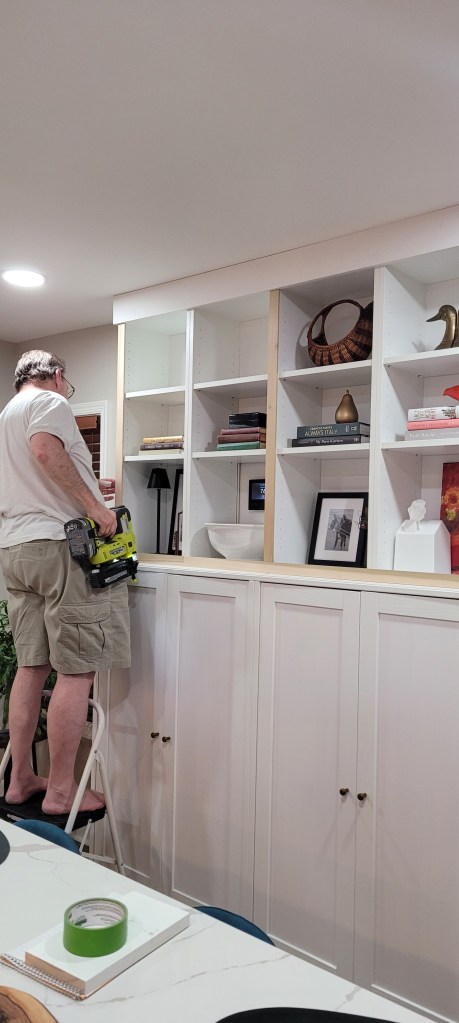
Because we knew we wanted to change the color on the unit anyway, we used the opportunity to add some additional trim to the crown to hide the separation, and then set about to painting the whole shebang, once again. Big sigh.
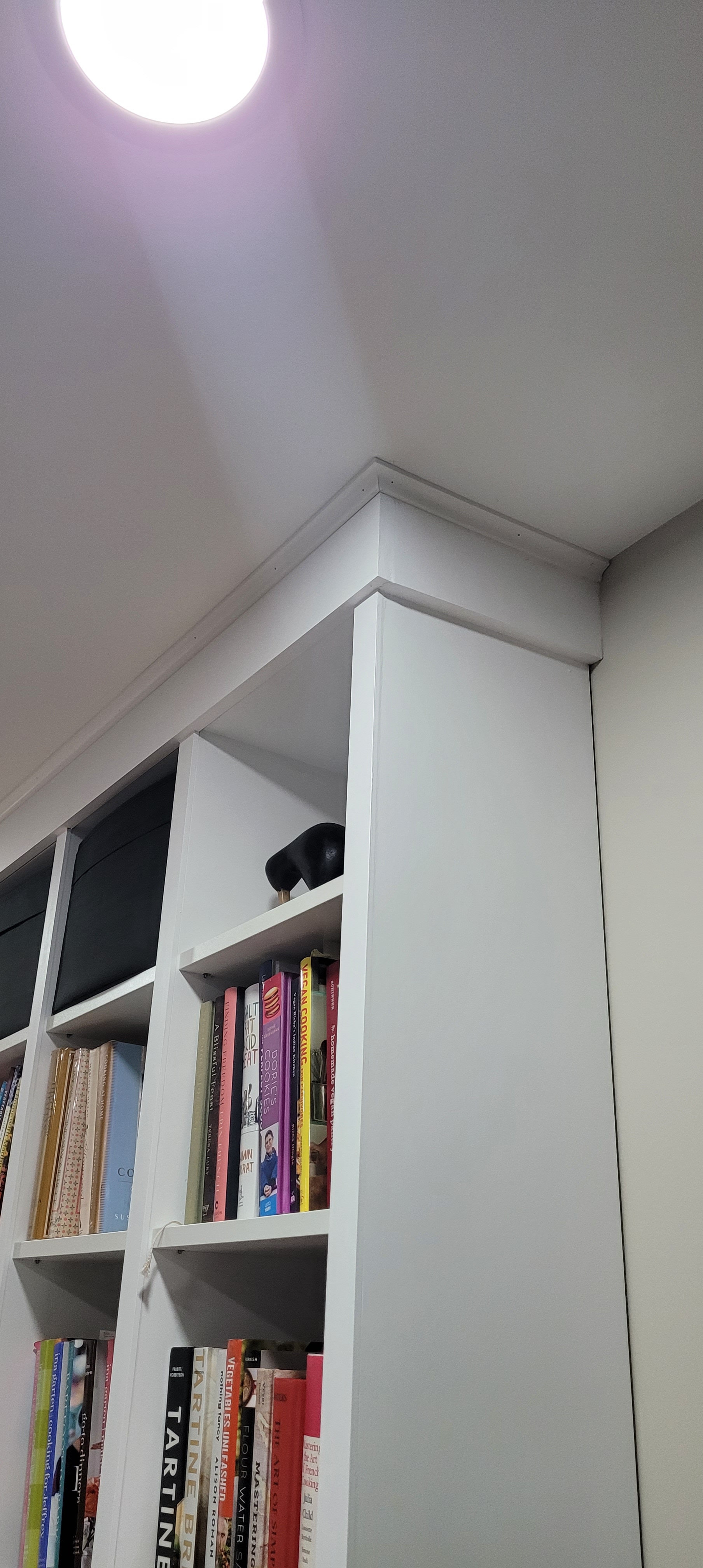
What we didn’t do was caulk the piece of crown trim to the ceiling prior to finishing. Once we get the thing painted out (I’m going to hyperventilate if I keep these big sighs up), we will load all the books and appliance back in and THEN caulk the ceiling.

We struggled to choose a color that would blend with the kitchen and not be too much of a distraction. We originally set our sight on black, but then thought it might scream, “Look at me!” from the back wall of our kitchen. Because our kitchen walls (along with the whole house and the walls of the massive island) are painted Benjamin Moore’s Edgecomb Grey (a soothing, beigey/grey — the kids call it ‘greige’ these days), Ben (Moore, that is) recommended a number of complementary colors that go with Edgecomb Grey, including a navy blue and a deep putty grey. Navy blue, especially on islands, has been done to death — similar to its ship-lap cousin in popularity, it was a little too on-trend, and besides, all the TikTokers tell us the navy island era has passed.

So, we went with…drumroll, please! Benjamin Moore’s Chelsea Grey! It is exclamation-point-palooza over here with that decision behind us. Seriously, you don’t really want to know how long it took us to choose the color. When we saw it weirdly, and identically, matched the veining in our quartz countertops, we were flipping sold.

Here she is, with the first coat on. So far so good, but keep in mind, I said the same thing when we got the first coat of white on her, now many moons ago. We also changed sheens from a Matte to an Eggshell, so we’ll see if we can contain our excitement (and use of exclamation points) when we see that gloss-up happening on the second coat.

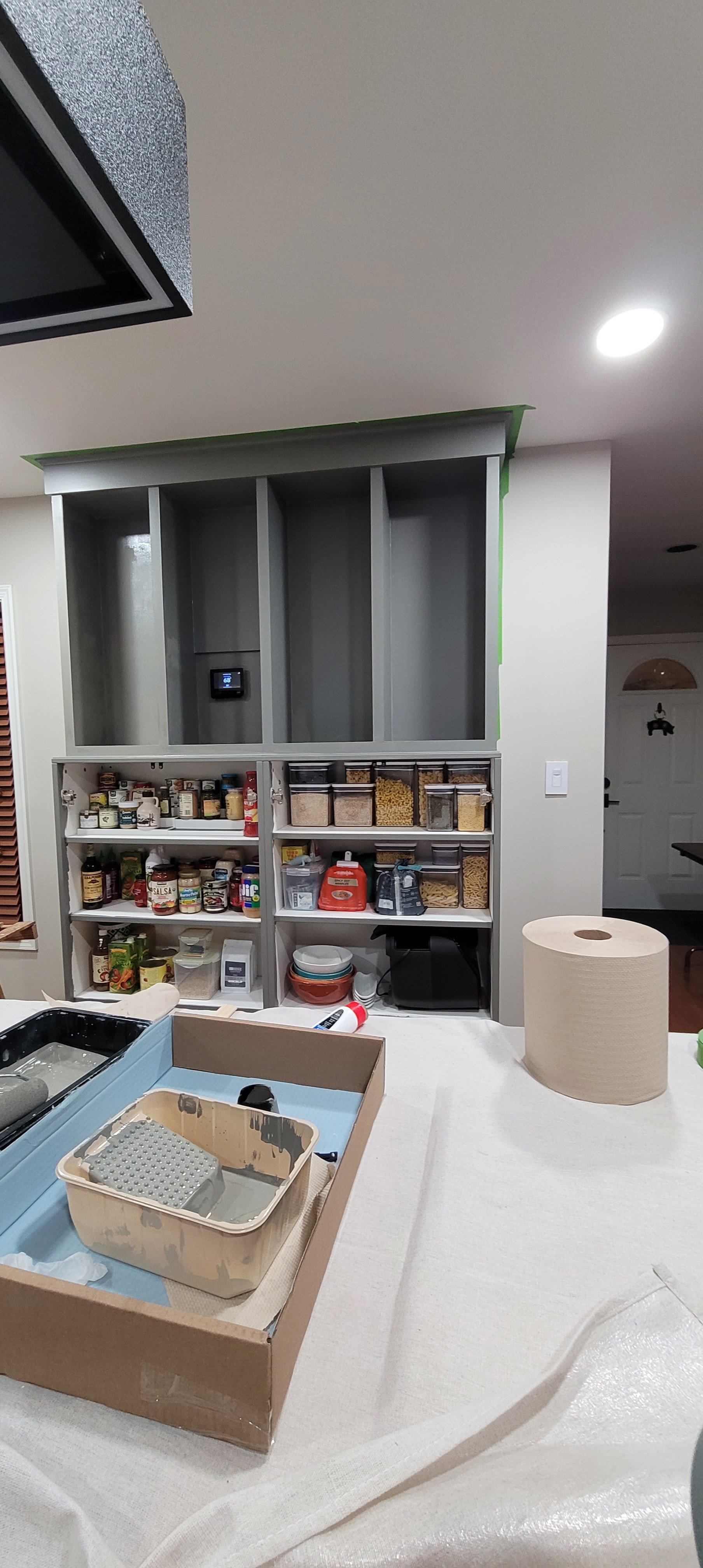
We should be done soon — the only motivation I have is that our kitchen once again looks like a construction zone. We could open a small paint supply store with all the bins we have of painting supplies. “Oh, look, they’re giving away free paint stirrers!

[Sigh…]

With just 30 days left, give or take, before we hit the year** mark on our kitchen renovation project, we are scrambling to finish the last item on our checklist.

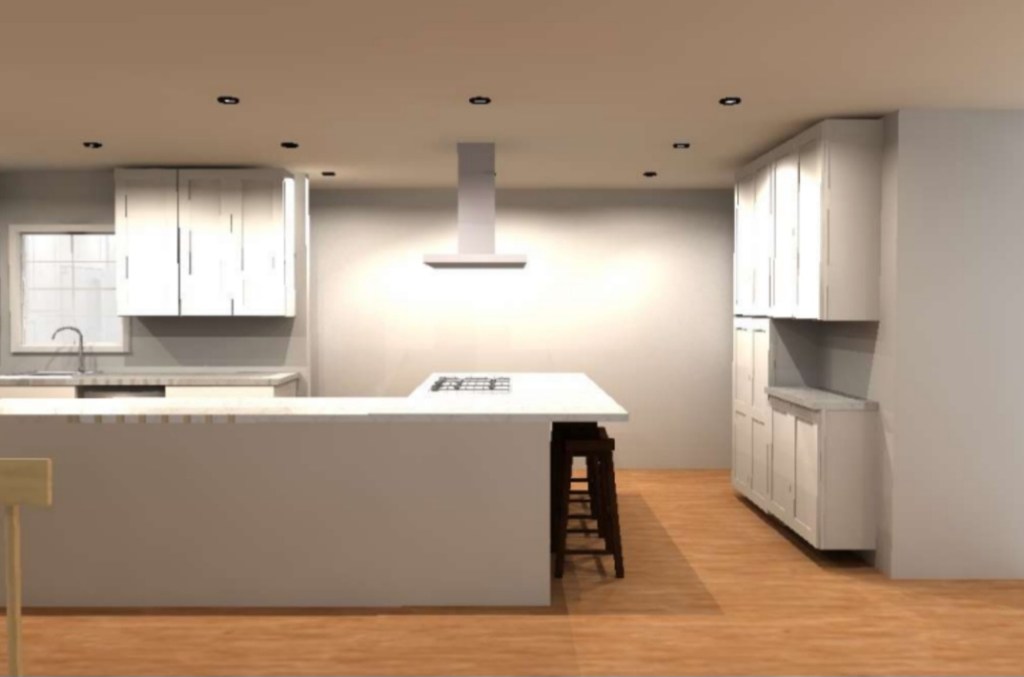
We lovingly call this unit the beast, and the nickname has proven true to form with all of the steps (and time) involved in getting this thing built. These utility cabinets were in the original renderings for the kitchen, but we always knew we would wait until everything else was completed to tackle this baby.

The rendering above is of the far end of our kitchen, which included the utility cabinets, albeit in a different configuration than we ultimately landed on.

Rather than go with the same cabinetry we chose for the rest of our kitchen, we wanted to hold off purchasing these utility cabinets until we saw what kind of space we would have left after the massive island was set in place.

We weren’t sure whether we could do a full 24-in depth on the utility cabinet, a 16-in depth, or even less. What we did know was that we wanted plenty of walkway space behind the stools that faced the rest of the kitchen. Nothing makes a room look smaller than inadequate space to walk! And, nobody loves being stuck at the far end of a counter, not being able to squeeze by others who are sitting there.

So, we wanted to leave a full 3 to 4 feet of walkway space and just couldn’t get picture what that would feel like until the kitchen was relatively finished.

We are so glad we waited because the configuration changed, as did the depth of the cabinets, once we got a glimpse of what we had to work with in terms of space. In order to accommodate the spacious walkway behind the stools, we ended up with a 15-in utility cabinet depth, something we would never have considered had we ordered cabinets all at once.

We found the idea/hack from a bunch of different DIY bloggers to use several different IKEA pieces to form built-in cabinetry using solid wood IKEA Havsta cabinets topped with less expensive Billys.

The beast sits at the far back of our kitchen and because we considered it bonus space,  it fell way down on our to-do list. Even though we didn’t think we needed the extra cabinet space, we are not surprised we have found a way to fill them up!

Once we set the cabinets in place — we used two Havsta cabinets and four Billys — we knew we would have to complete the baseboards first. In order for these to look as “built in” as possible, we removed the baseboards behind the cabinet so they could fit snug against the wall.
“Snug” would be actually be a luxury as we have very crooked walls, but we accommodated their quirkiness as much as possible, knowing caulk will solve the rest.

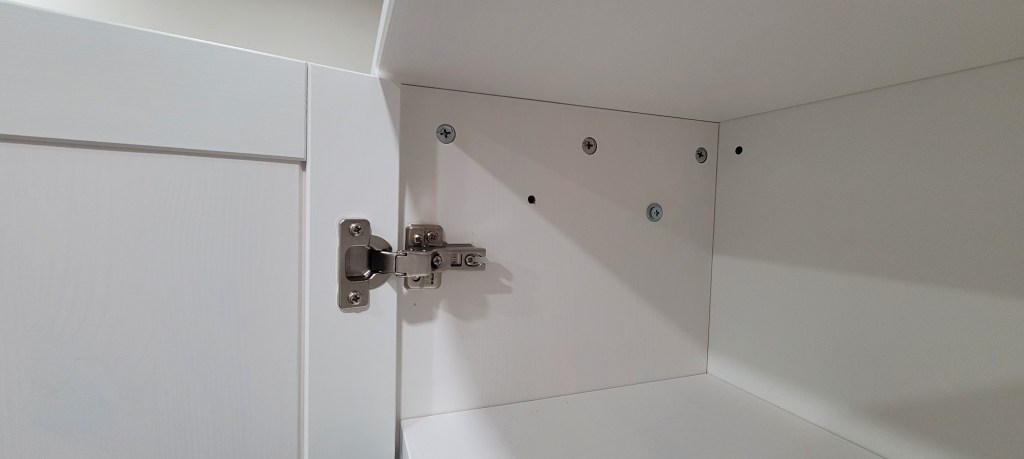
Next, we turned the Billy cabinets upside down so their bases would form a nice backing to attach some crown molding, and then bolted everything together from the inside. (Scroll up a few photos to see the upside down Billys before they got crowned.)

The next step was adding trim which really helps drive home the built-in look. We used 2-in wide unfinished pieces of oak which we found online.

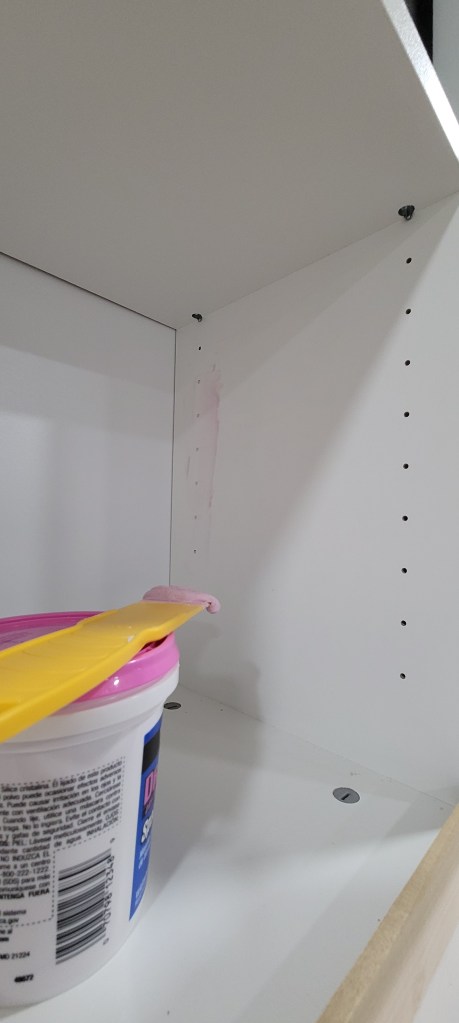
Then, it was on to using wood filler to fill in all the spaces where wood met wood, spackling all of the shelf holes which took weeks, if we are being honest. Not the favorite task of the project, but one that also will help visually declutter the look of the unit.

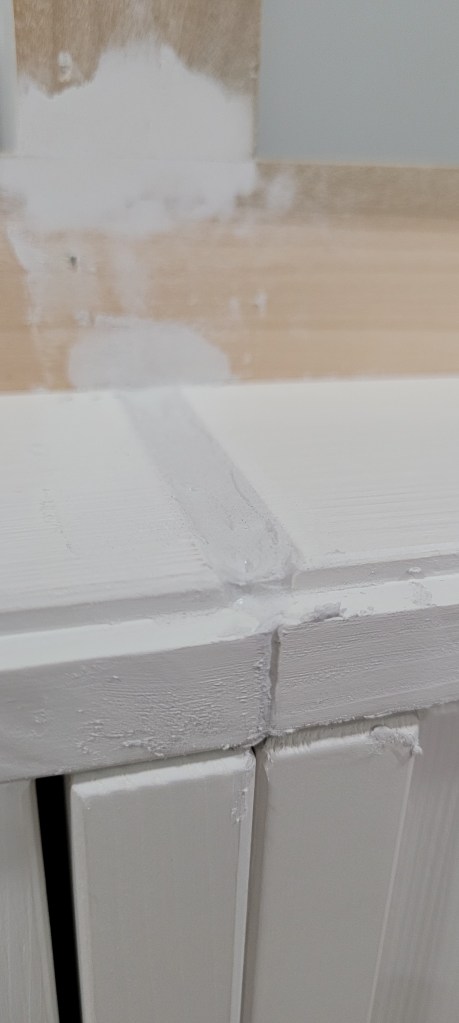
We also spackled the deep crevices which were created when we smushed the two base cabinets together. Again, this is to make a seamless built-in look. In the photo below, you can see that we filled it partially. Let it dry for a day or so, sanded, and then came back and filled it again with spackle. We repeated that process until the seam was…seamless 🙂 I forgot to snap a photo of that, but the proof will be in the pudding when the finished cabinet is revealed. Fingers crossed.

Because these crevices were so deep, we would apply a coat, let it cure for a day or two, sand, and repeat. For days…

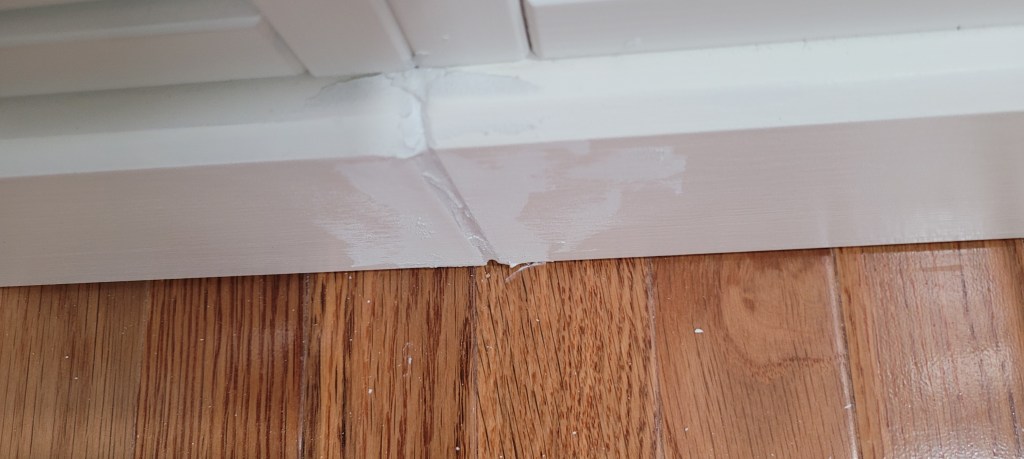
We finally finished sanding everything which is also an exercise in patience-building (one we would like never to repeat!) We are now in the final stages of caulking everything — where the backer board of the Billys meet the side walls, where the Billys meet the Havstas, where the trim meets the crown, and where the base molding meets the Havstas.

As soon as the caulk dries, we will apply an initial coat of shellac primer that must dry and cure for at least two to three days, before applying a second coat. The hardwood cabinets likely would not need that much attention, especially since we ultimately will be painting them white, but Ikea cabinets not made of hardwood — the Billys are some particle board mish-mash — must have a good shellac primer. This will keep the cabinets from easily scuffing and scratching with everyday use.

Once the shellac is fully cured, a step that will take at least the next four to five days, the whole thing will get two coats of Behr Premium White Matte — Scuff Defense (which the internet tells us is the closest match to the color cabinets we have in the rest of the kitchen). Note to Ikea: Here’s an idea for a money making endeavor. Sell paint to match your products!

Once the beast is done and dusted, we can confidently say we are finished. (Unless you count the punch list — boy, do we have a punch list…!) But, we think, if luck is on our side, we may have some before and after pictures to share by the end of the summer. I know you’ve heard it before, but this time we think it’s gonna happen 😊

**The project ‘year’ anniversary changes depending on our mood! It is true that our house became a storage locker for cabinets that were delivered last July. But we did not start pulling up the floors until September, so we are still on our game.

The Island is (99.999%) Done and Dusted!

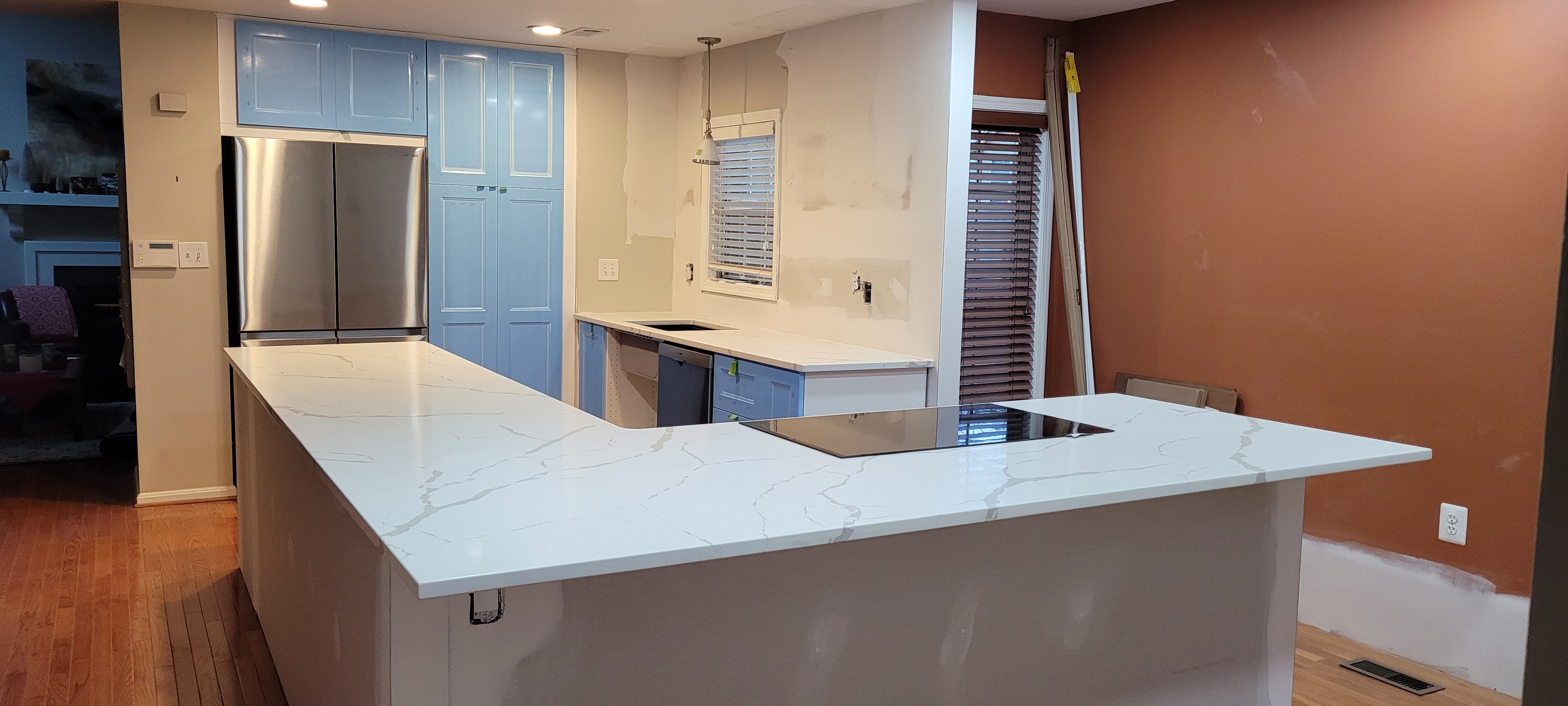
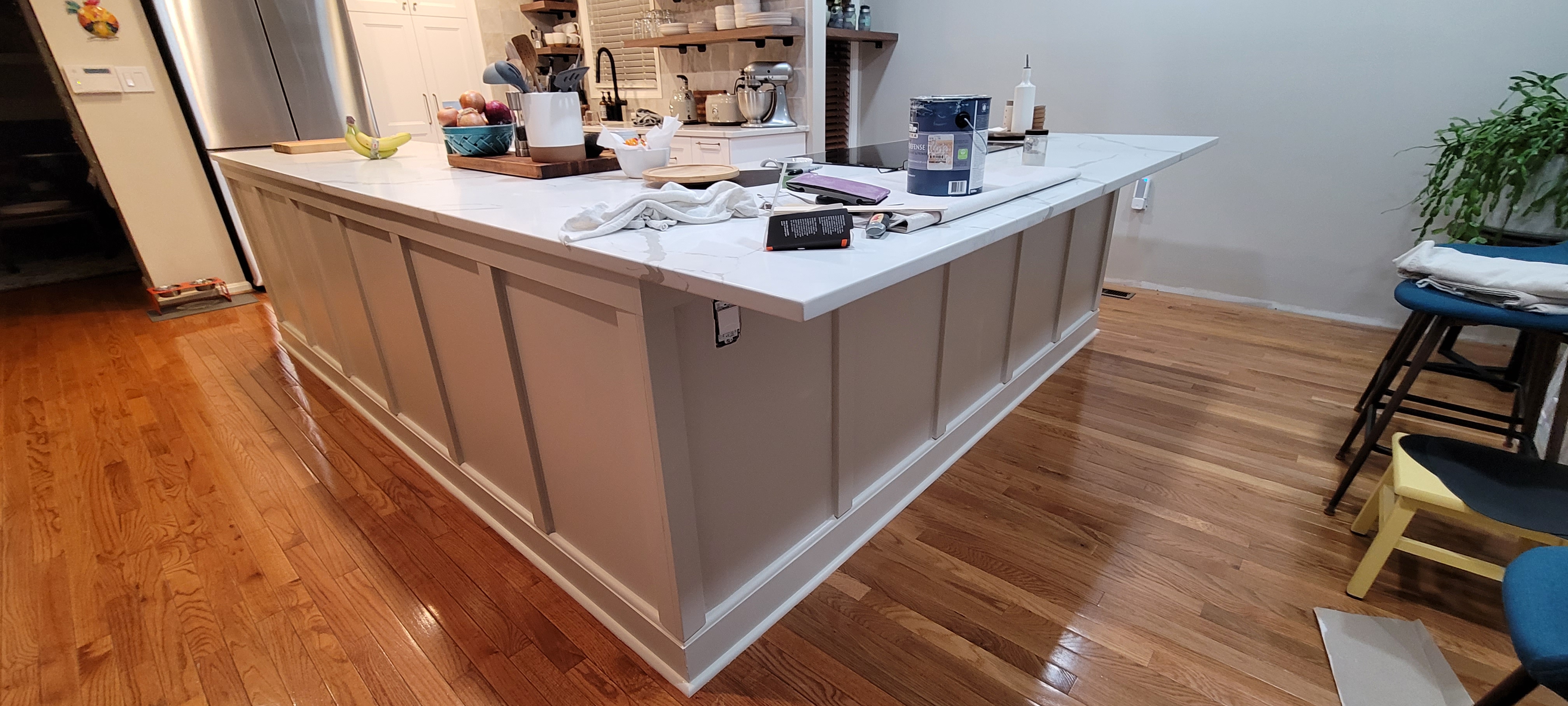
We can put a huge check mark next to this item on our punch list — this one was a long time coming. The contractor left us with a pony (knee) wall, counter tops, cabinets and appliances installed, but the back side of the massive island was ours to complete. Because it is front-facing to the rest of the house, we had to make sure it didn’t compete with all that was going on in the various spaces surrounding the island.

Where we started…

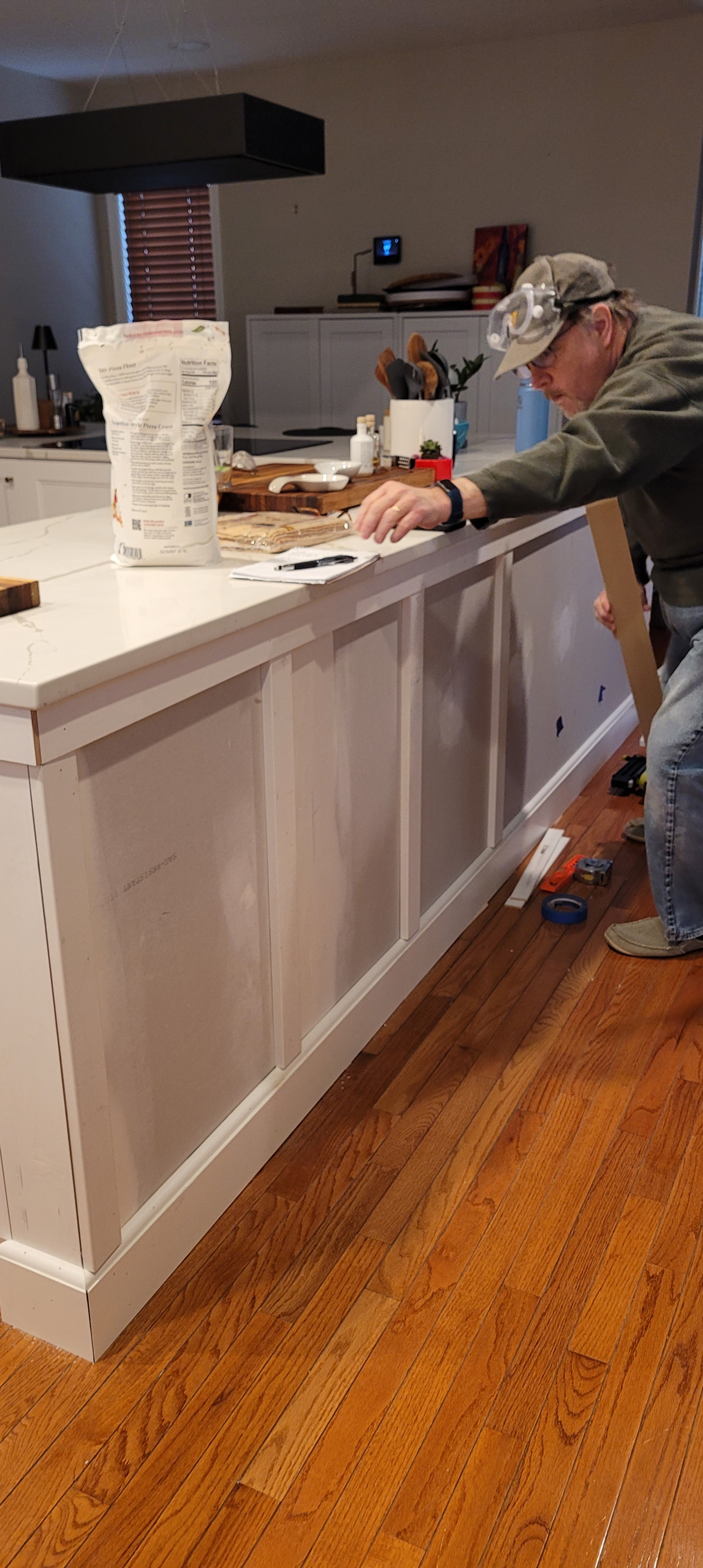
As we said in the previous post, we took a l-o-n-g time to consider our options. Adding some base moulding and applying cover panels was one option. Because we knew we would likely be toning down a lot of the colors in the kitchen by sticking with muted grays and greiges, we definitely wanted to add some texture. Enter board and batten.

Board and batten or boxing framing or even horizontal shiplap are common themes when it comes to islands, so we had a lot of options to consider, but they all play around the same theme. Since we are slowly changing the base moulding throughout the entire house — building them ourselves — we already knew we would use the “new” base moulding on the island, too. How to incorporate the battens and the rest of the framing was where we focused our planning.

Ultimately, we opted out of a full box trim because we thought the layers starting from the base moulding on up would produce too small of box panels and thus create a really busy look for this very open, but ultimately modest, space. Instead, we went with straight battens, ending at the base trim. There are so many tutorials for how to do proper board and batten online, and I think we watched every video we could find. We also had already done this before, so we kinda knew what we were getting ourselves into. We’ll try to pull together a tutorial one of these days and save it on the website.

Look at the intensity on that face 🙂

Finally, once all the bits were installed, we took to re-mudding parts of the panels because the original dry wall was, well, really messy. It is easy to blame the contractor, but honestly, they had a huge job on their hands and tidying up dry wall mud wasn’t their first priority, nor truly their responsibility. Remember, we hired them to do the electrical and the big stuff (like building pony walls), but we wanted to manage the rest ourselves, both to save cash and to create exactly what we wanted.

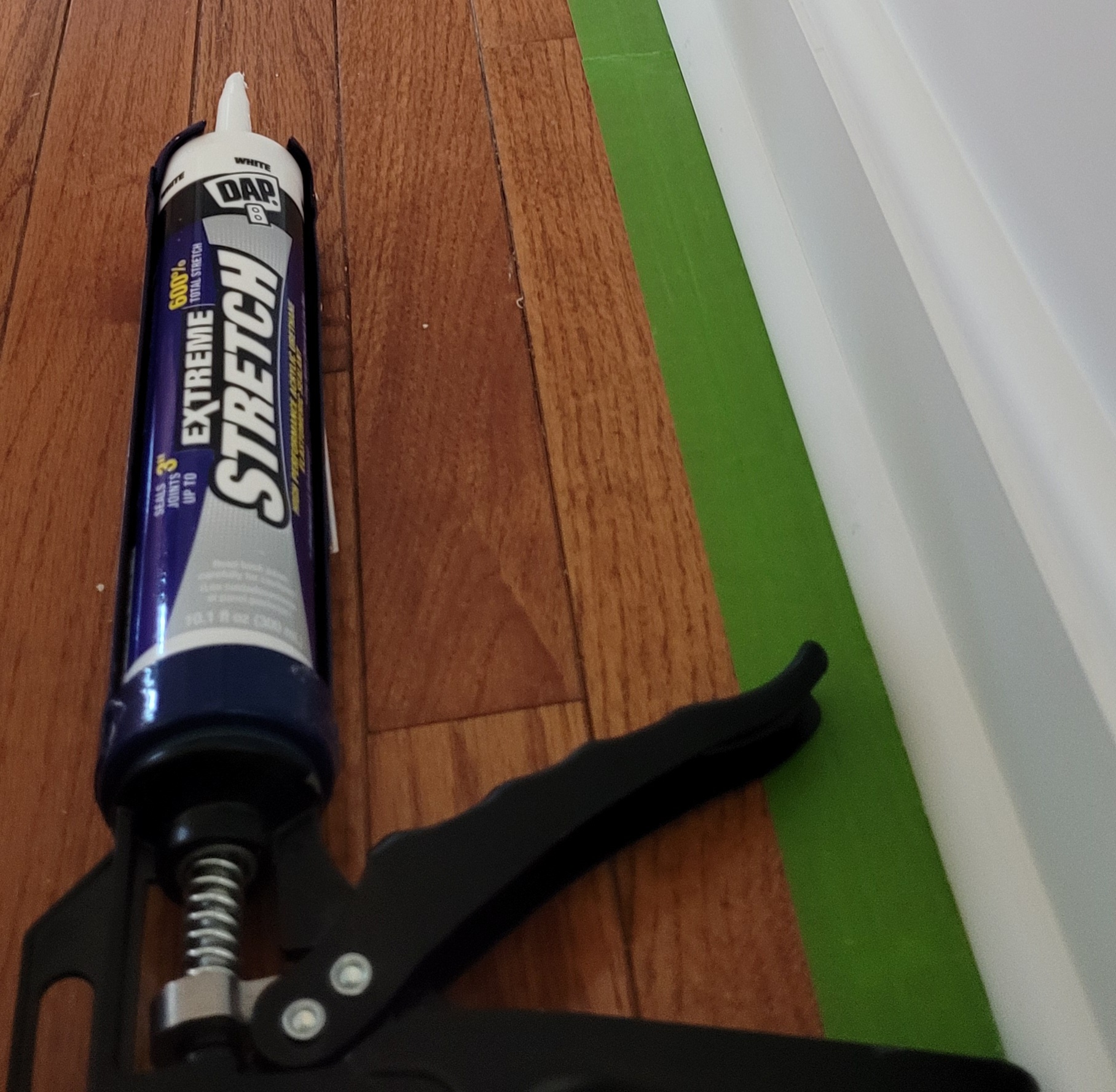
After all of the re-mudding, sanding, and nail hole-filling, we got to caulking. Caulking all of those seams makes for a more professional finished product, so the headache is well worth the time. In recent years, we have used Dap Extreme Stretch which is paintable and has never cracked nor shrunk on us.

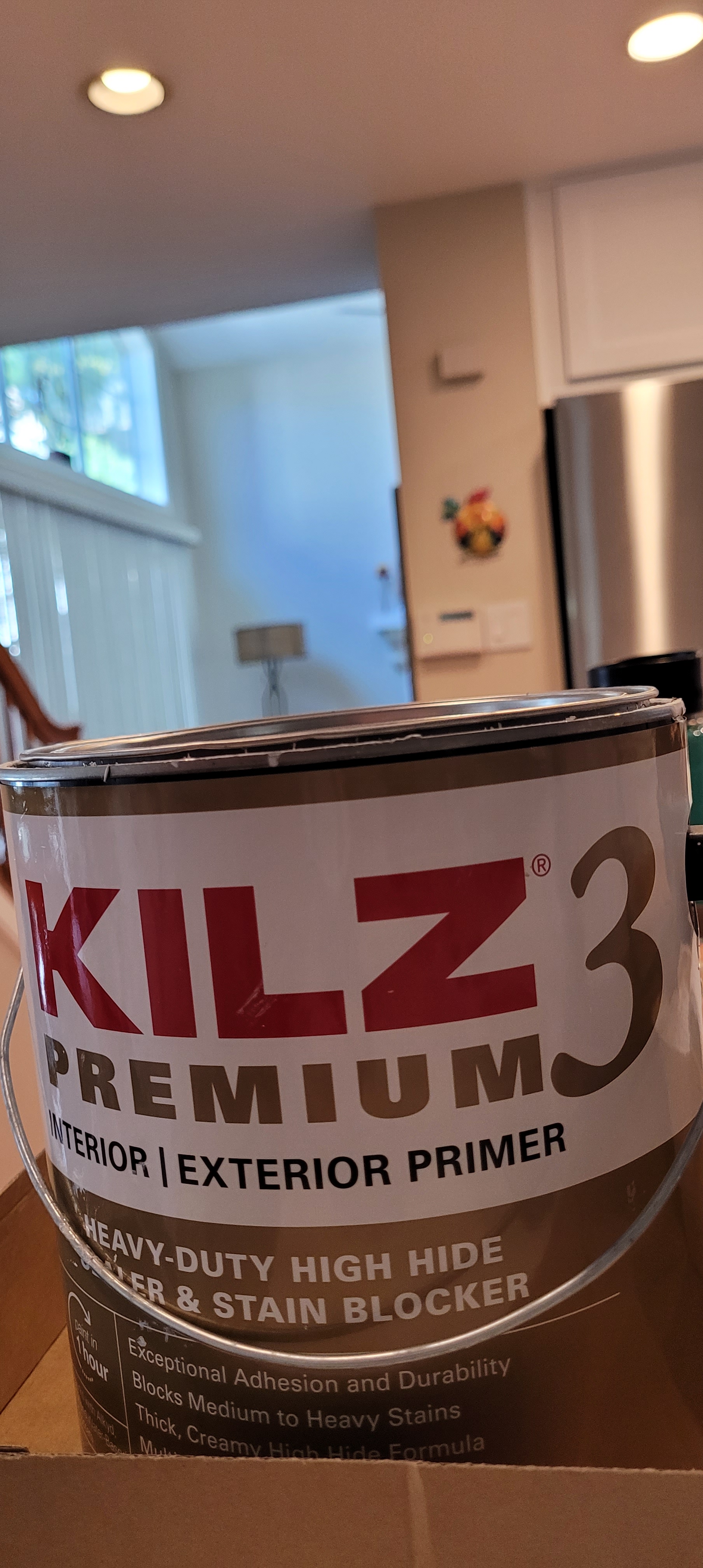
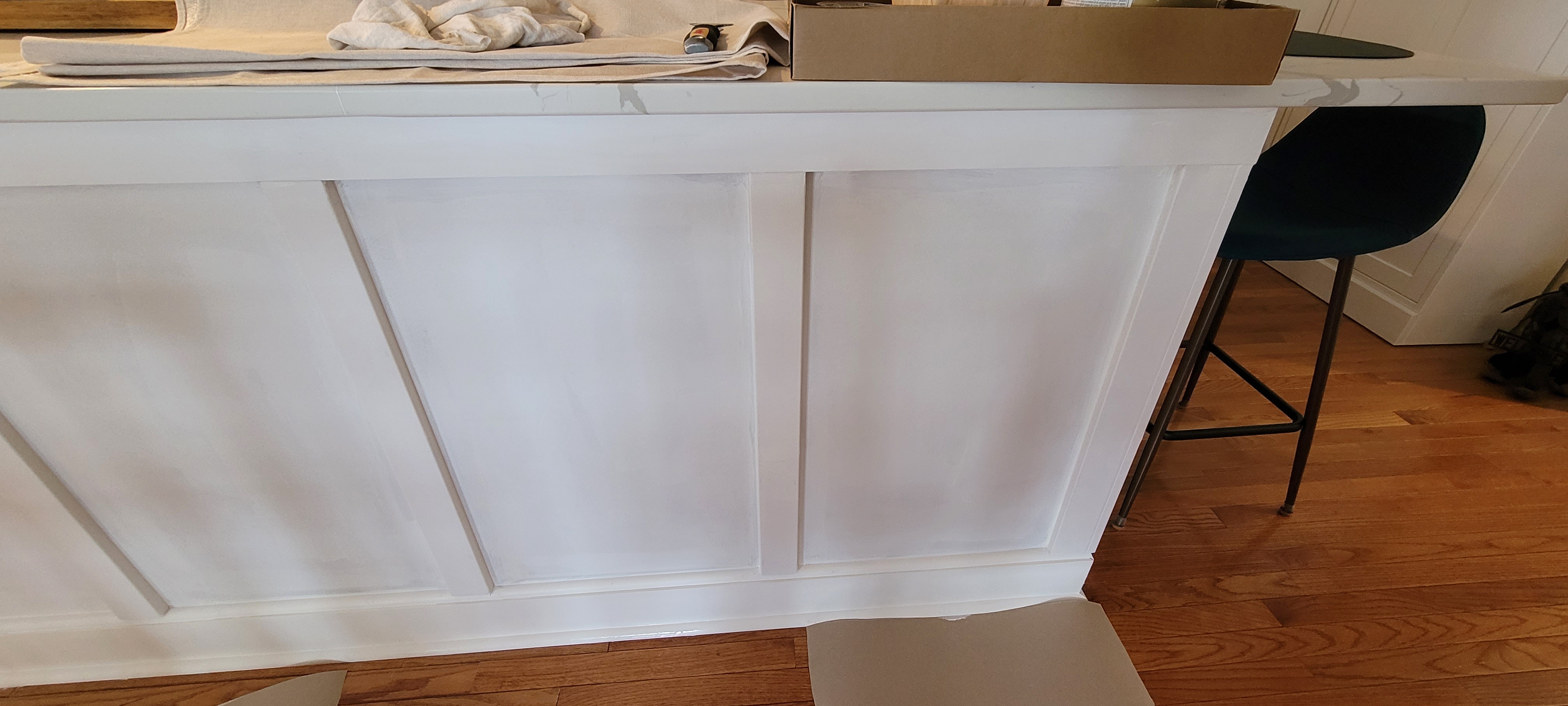
When the caulking trauma/drama was finally over and done with, we were able to apply the first coat of primer. Again, primer is necessary on bare drywall board, but it is also a must when you have applied wood filler, nail hole filler, and caulk — as those products can “flash” through to your finished wall. So, in an abundance of caution, we applied two full coats of Kilz 3 primer, sanding in between each coat for good adherence.

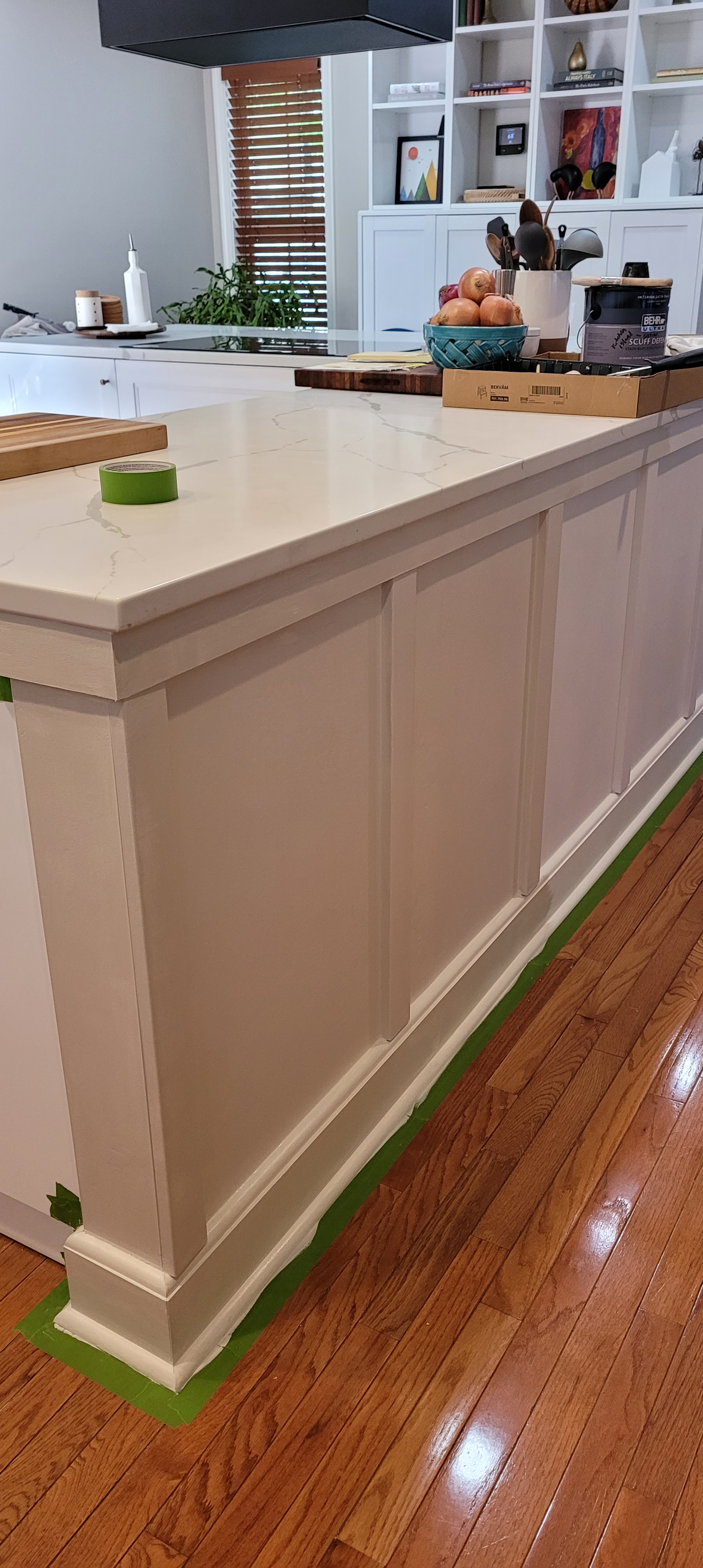
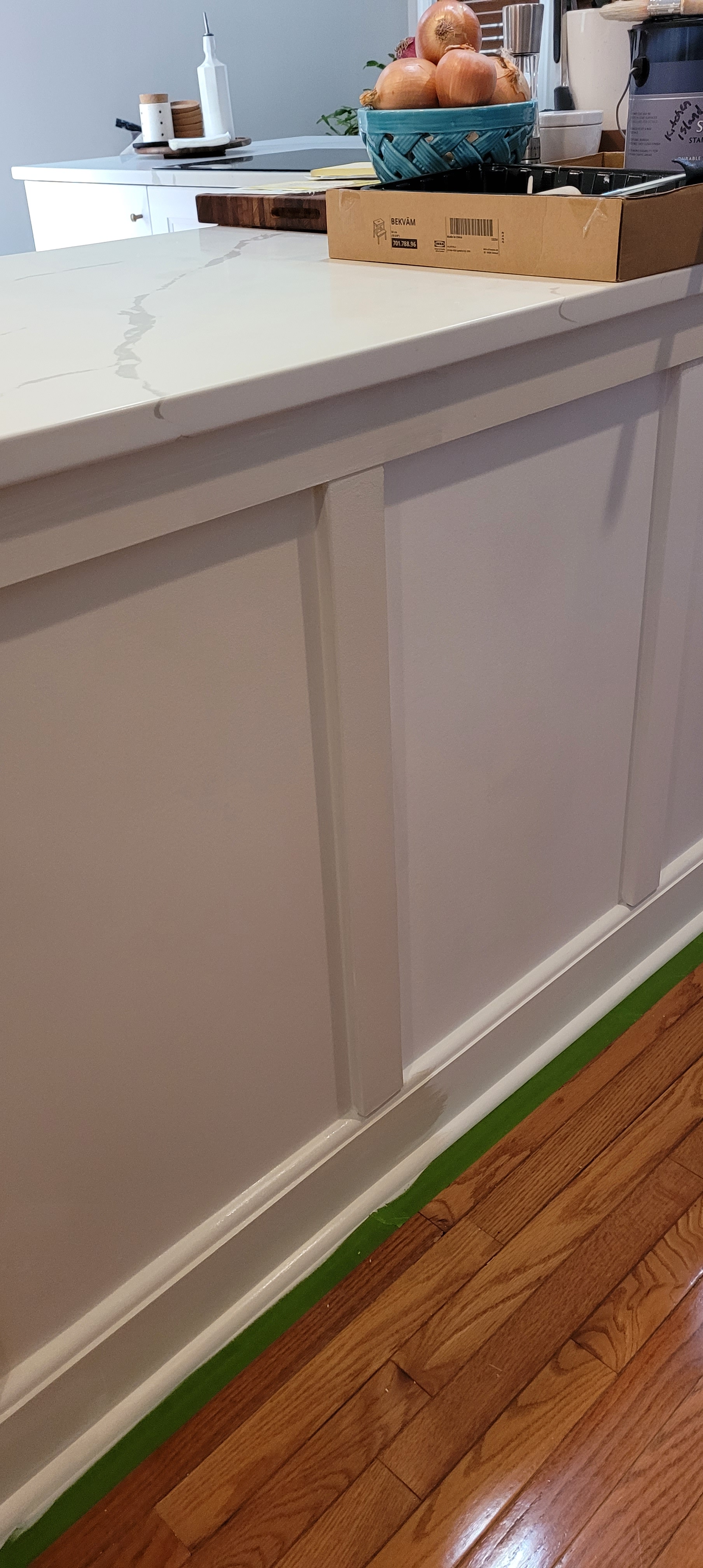
With priming behind us, we were able to start painting. FINALLY! We went with our whole house paint color (we have a complete open concept on our main floor, meaning that all the wall color is the same. Ours is Benjamin Moore’s Edgecomb Gray.) The big dilemma was which sheen to go with since we had decided to paint both the trim and the walls in the same color. Normally, our trim would be in a semi-gloss finish, but our walls have always been flat or matte. We decided to strike a pose right down the middle and went with a satin. It worked! Just enough shine to add some light and reflective value, but not enough to look weird.

We have never been lucky enough for one coat to do the job. But, were a little surprised to see that the second coat didn’t quite do the trick, either.

We waited a full four hours between coats (we think it is more durable when each coat has a chance to fully dry), and ended up, late last night, adding a third coat. Which was, indeed, the charm.

We still need to add some scribe to this baby on the end caps, and be gentle with it for the next four weeks (the prescribed “cure” time), but we are glad to have this major hurdle scaled and cleared!

Next up, this monster needs to get trimmed out, built in, primed, and painted. Story of our reno lives 🙂

Perfection (in this case) Is Not the Enemy of Good

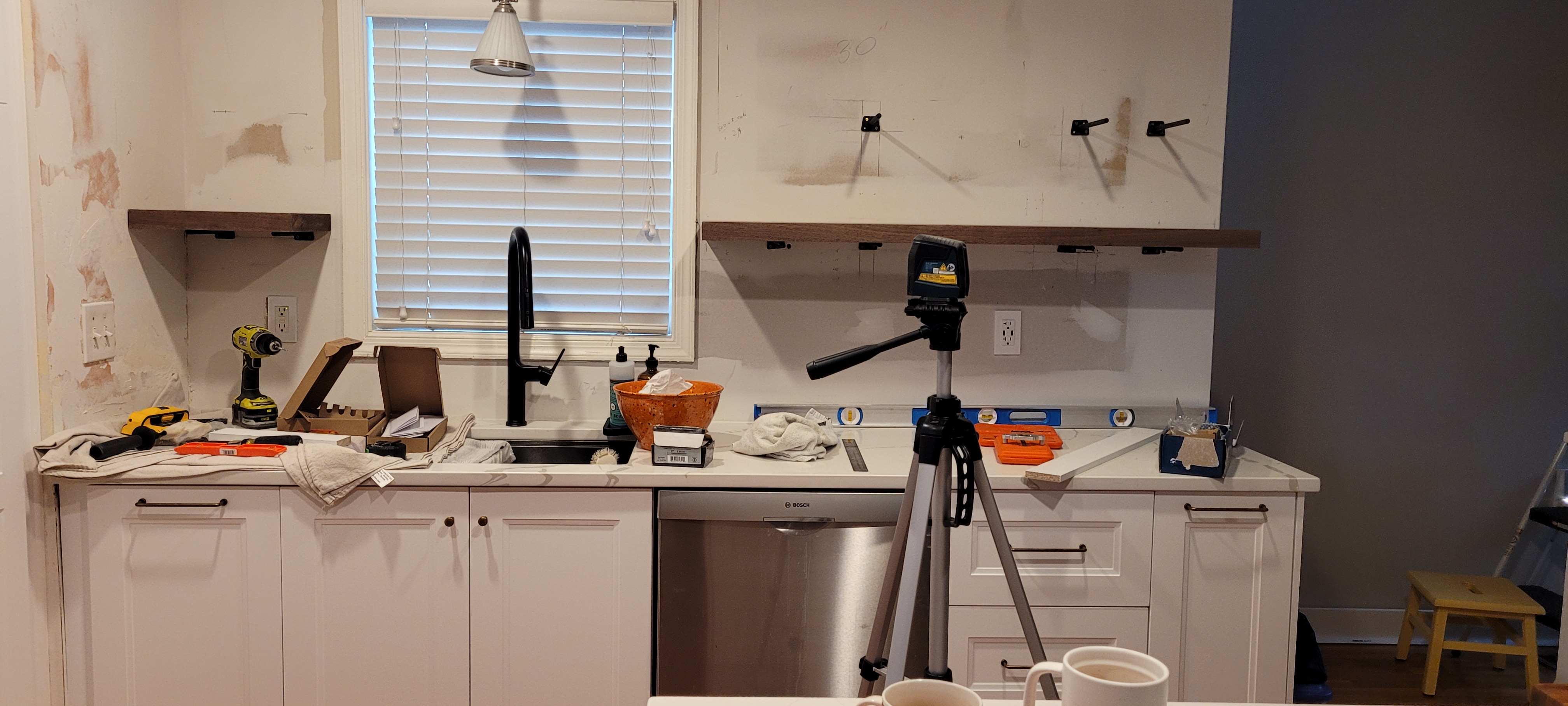
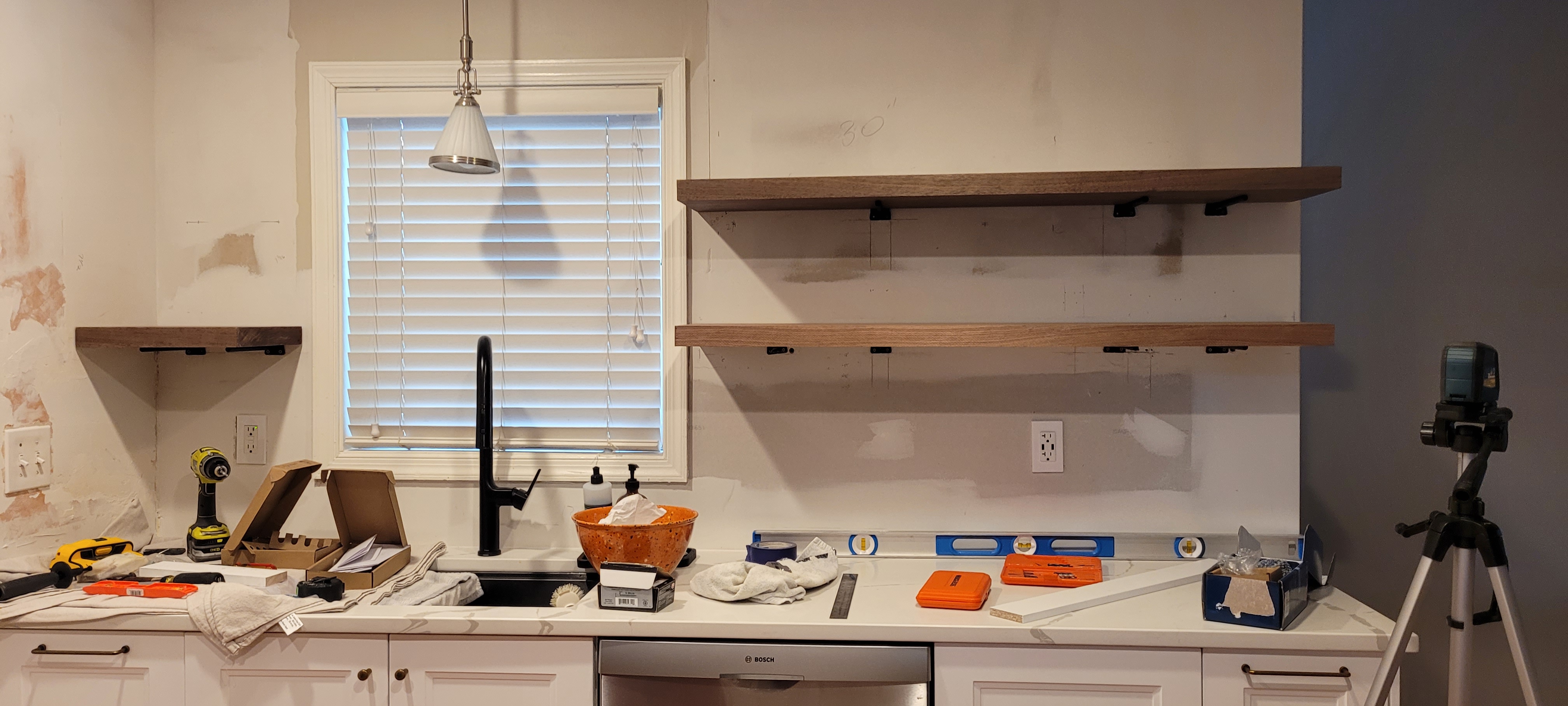
With the happy interruption of a pup visit from the cutest puppy ever, we are now scrambling to get the posts for the floating shelves installed before the tile guy comes early this week. With Andrew’s help, they were able to get three out of four posts installed with the last destined to be up by the time the Cowboys lose later today.

There is absolutely no room for error (on the shelf installation — the Cowboys are another story — also, Fly Eagles Fly!), so the amount of measuring devices currently littering our counters could land a space shuttle.

The next terrifying step is to drill holes in our precious walnut wood in exactly the right spots so that they slide seamlessly onto the posts, hence the floating shelf effect. Except that these are going to be strong enough to hold an overweight fullback during the off season.

Once the tiling goes on, we’re going to start taking down the pantry wall trim that the contractor installed incorrectly and doing it right. Yay 🙂

Cabinet Jewelry!

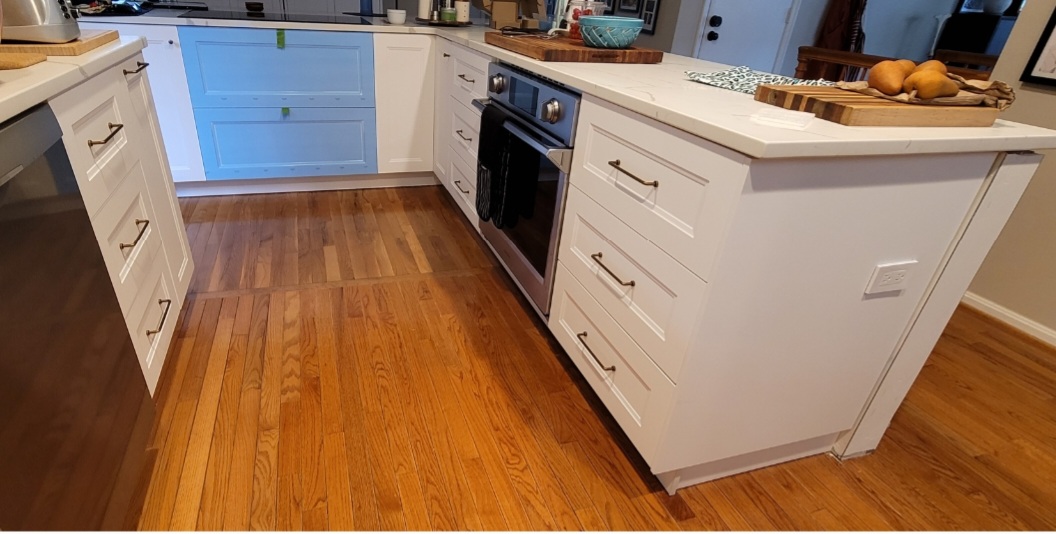
I am sure I’m not the only one, but just getting that blue cabinet protective film off and putting the gorgeous handles and knobs on has allowed us to see ahead into the future to what our kitchen might actually look like if it ever gets completed!

This is actually the first time we have seen the cabinets since we saw them in the showroom! Seems a bit risky now looking back, but thankfully, all’s well that ends well because we sure do love them and their crisp, clean lines.

Even more, we love the hardware we chose (the aforementioned jewelry!) We did have one minor setback. We held up the handles we were installing in our 24-in cabinets to the very large, 36-in drawers that go under the cooktop. Yikes! They looked puny! We thought about using two of them, but I really did not want to clutter up the drawer with two handles. Thankfully, we lucked out because the company had the same exact handle in the next larger size. There arrived yesterday, and we now have a winner for those large oversized drawers and pantry!

Our contractor would have installed all of the hardware for us, but I had major reservations about letting anyone else drill into our cabinets. I don’t think I could handle a crooked fixture (pun!) and I felt better having that in our control. At least this way, if we screwed it up, it was on us.

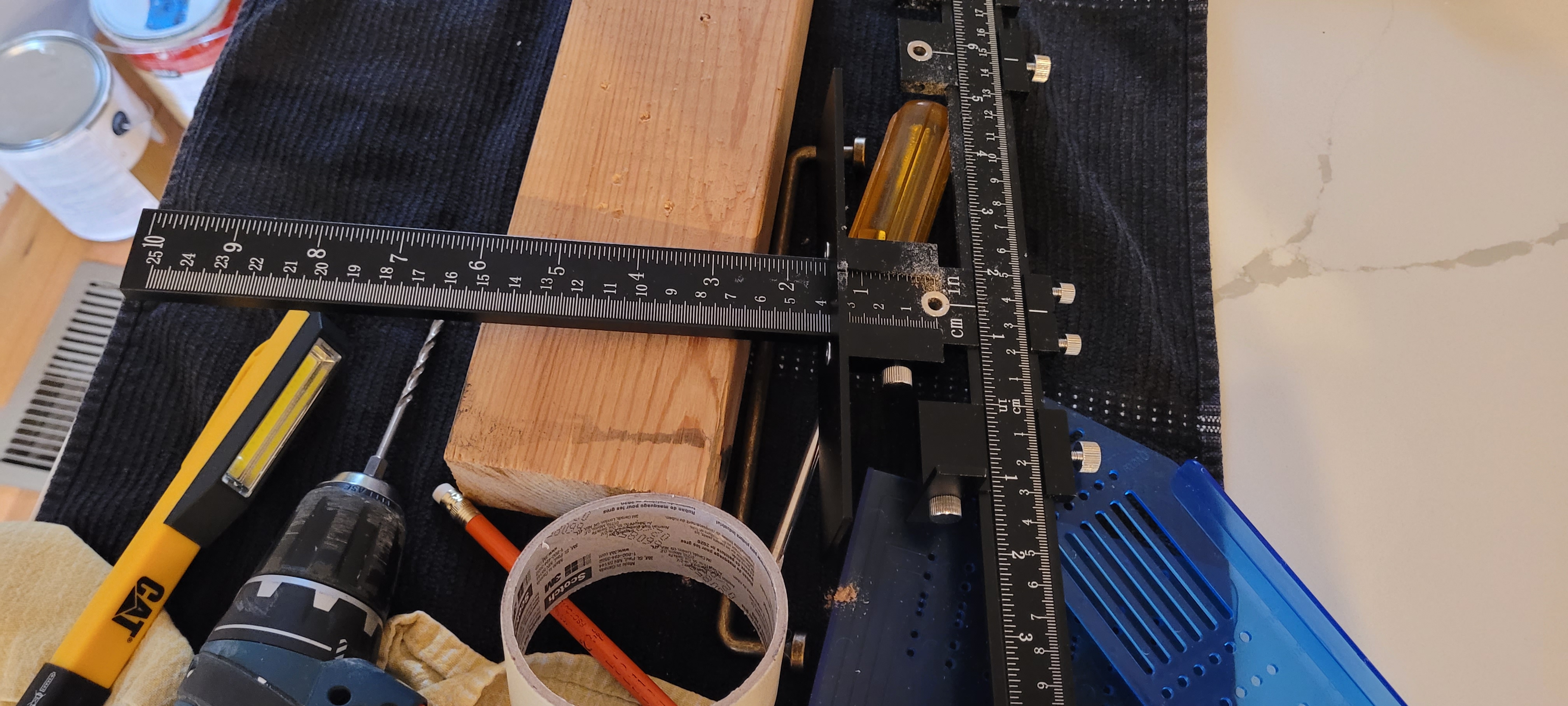
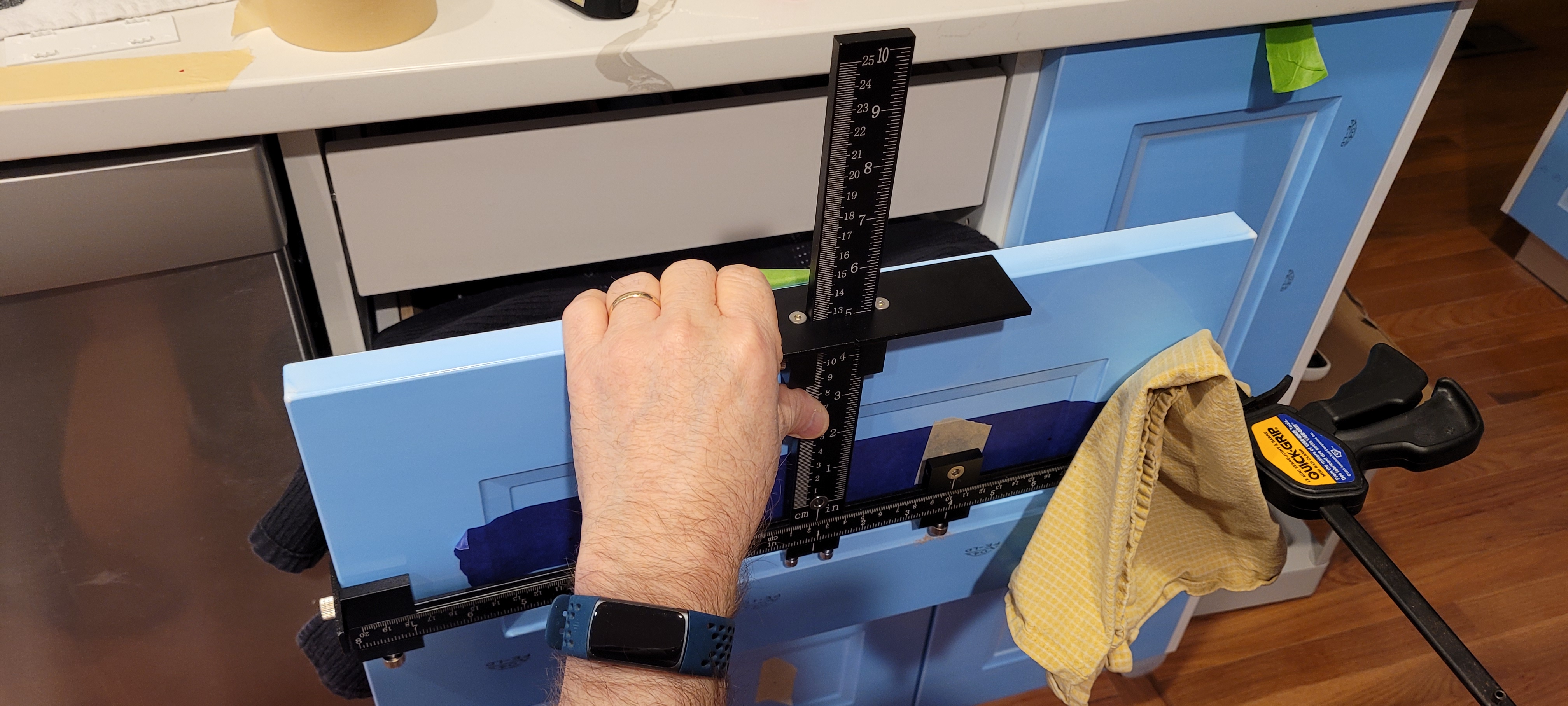
We did buy a cabinet fixture installation tool that has helped to insure every single handle or knob is spot on perfect. We have used the plastic kind of templates in the past, but for this renovation, and the expense of these cabinets, we invested in this tool which, to be honest, has a bit of a learning curve, but more than paid off to get perfectly installed fixtures.

A few tips for those who may be new to installing cabinet hardware. Go ahead and clamp a scrap block of wood on the backside of the cabinet as you are drilling. This will help prevent any blowouts on the back side. We also use a piece of masking tape on the front to prevent any splintering as the drill begins.

The last tip, make sure to measure anew each and every handle placement. Don’t assume your tool remained accurate. We found that we bumped it or dropped it several times and that changed the reading just a tad. So, go back and make sure everything is correct for each and every cabinet. We also double checked each mark before drilling with a tape measure just to be certain. It was probably overkill, all that measuring, but we are thrilled that with 15 cabinets down and eight more to go, our track record is strong.

Punch Drunk

Nothing sexy to see here. All about the punch list this week and moving back into a kitchen we’ve been displaced from for months.

We finally got the kitchen faucet touch system working after Kraus (an awesome company, btw) sent us a brand new faucet just to replace one of the faulty parts on our brand new faucet. The hubs got that done tonight.

After three months, we did our first load of dishes in the dishwasher. Glory be!

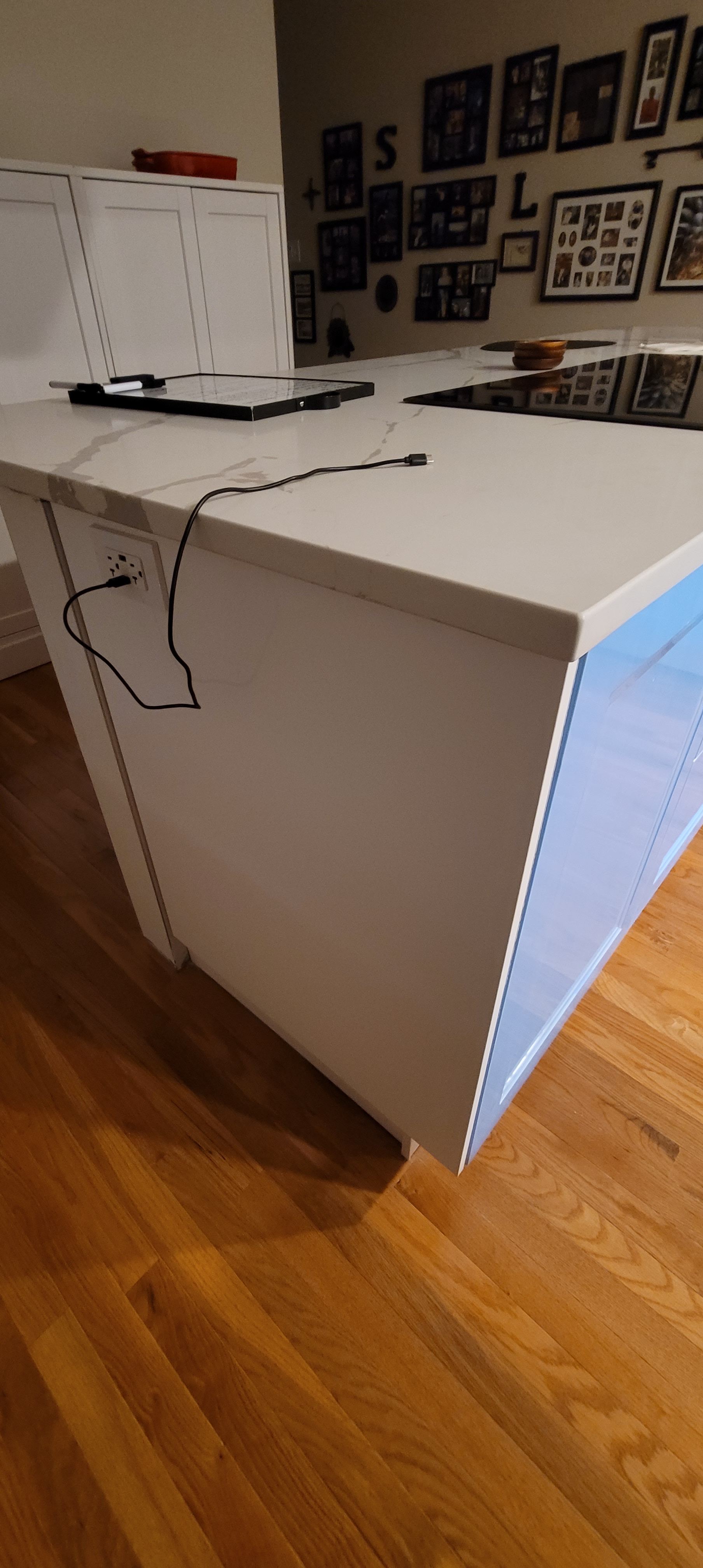
The outlets with USB ports were finally installed and operational on the island.

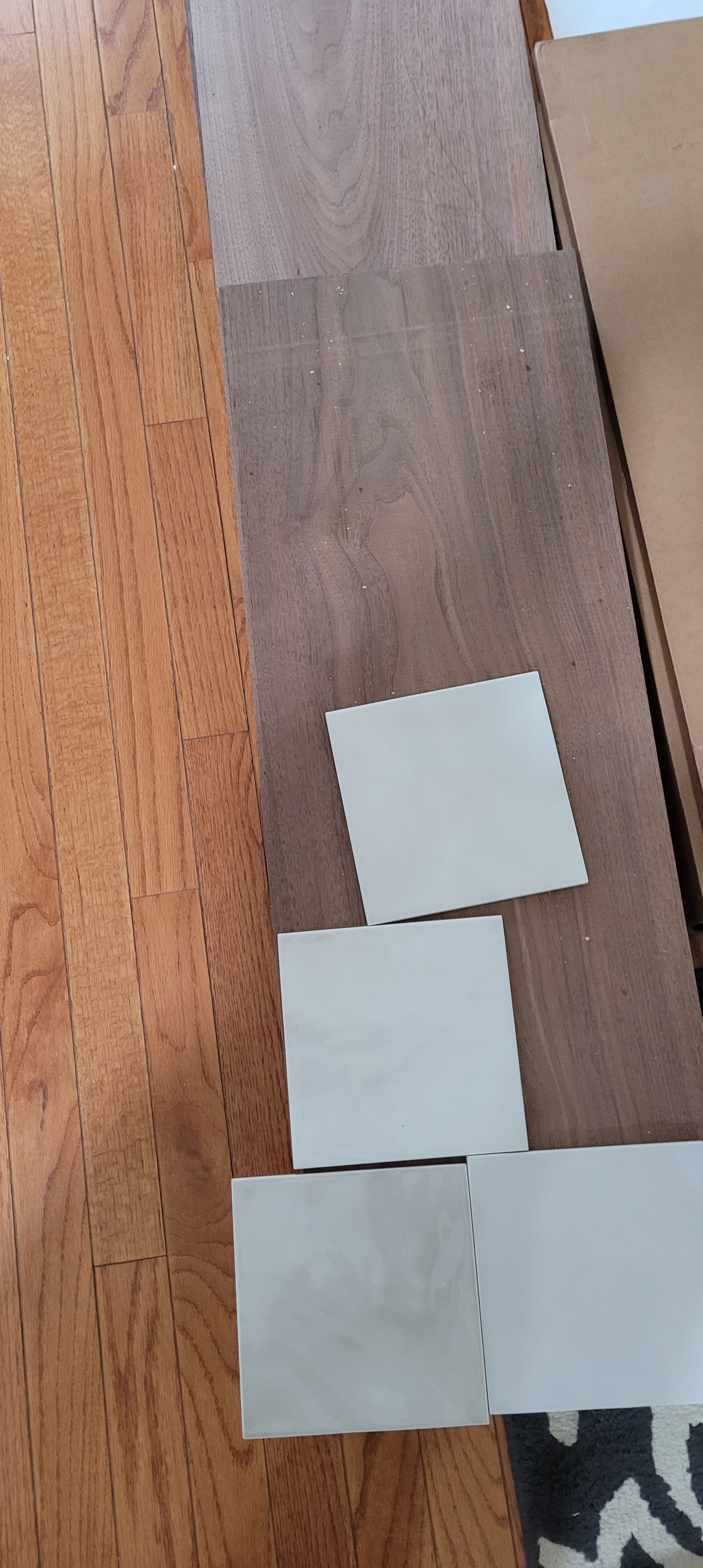
We are currently debating whether to hire out for a tiler or just do it ourselves, which neither of us have the energy for at the moment. And, we are searching for courage to drill holes in those beautiful slices of Walnutwood for our floating shelves.

Baseboards are on the back burner until we figure out what we want. Who knew there were so many choices?!
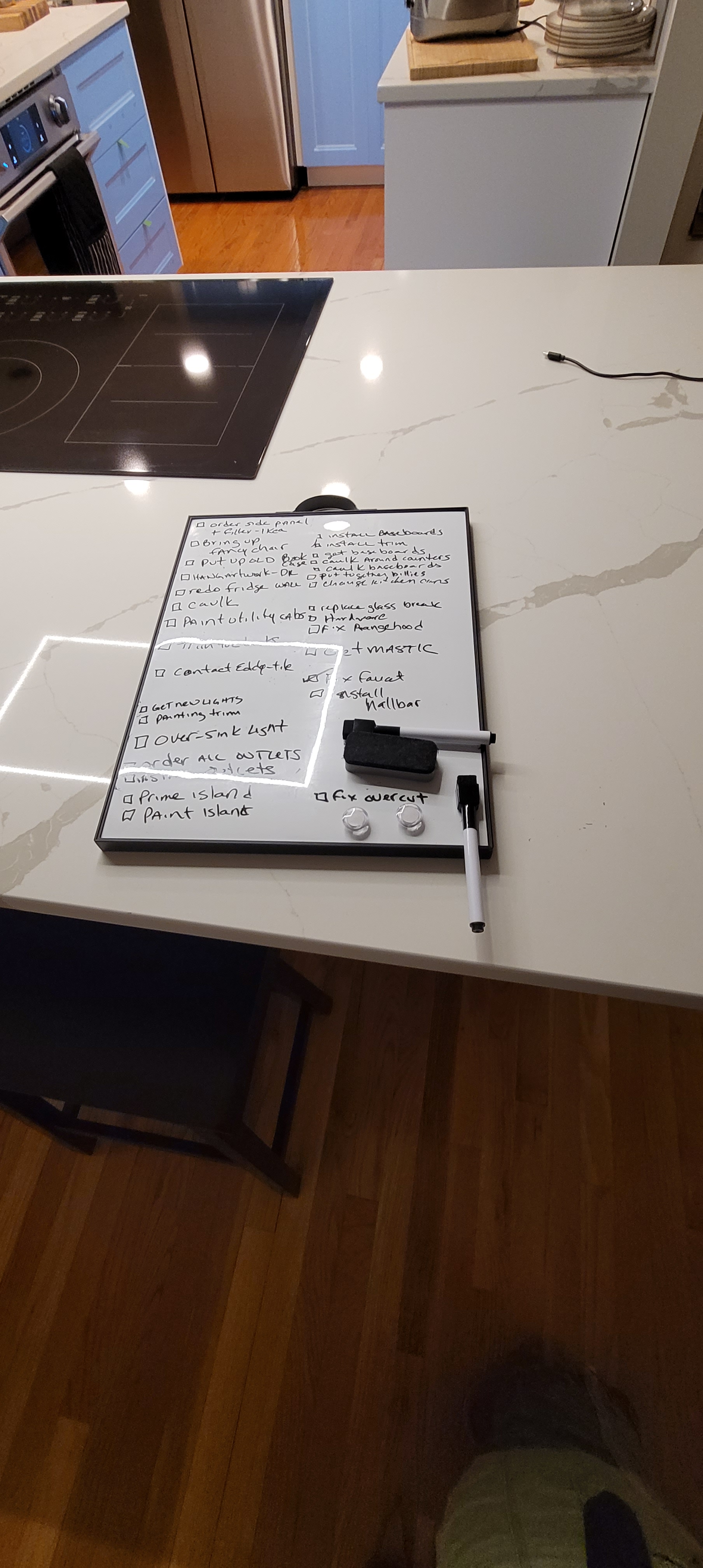
And, finally, the punch list continues to grow.

kitchenreno #kitchenremodel #kitchendesign

Pennsylvania and Walnutwood

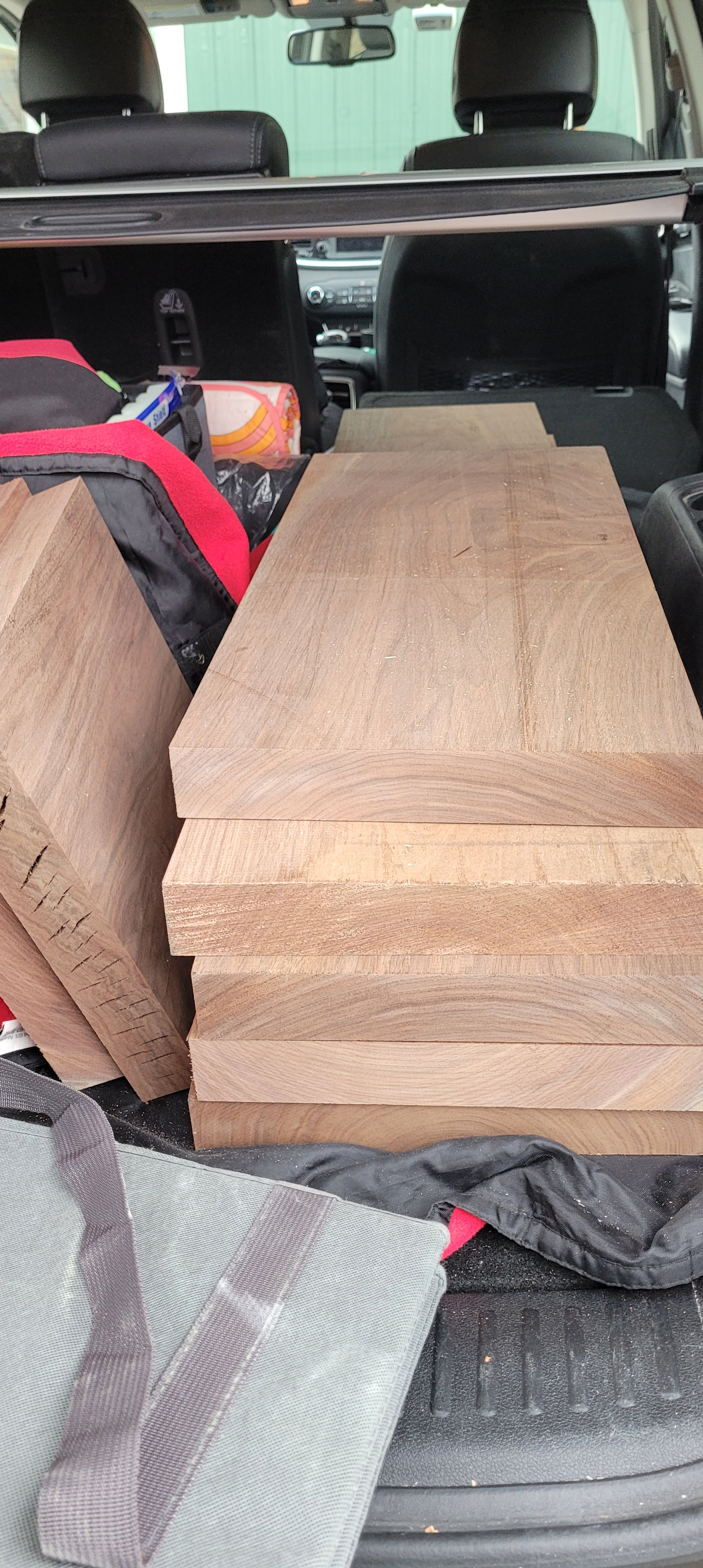
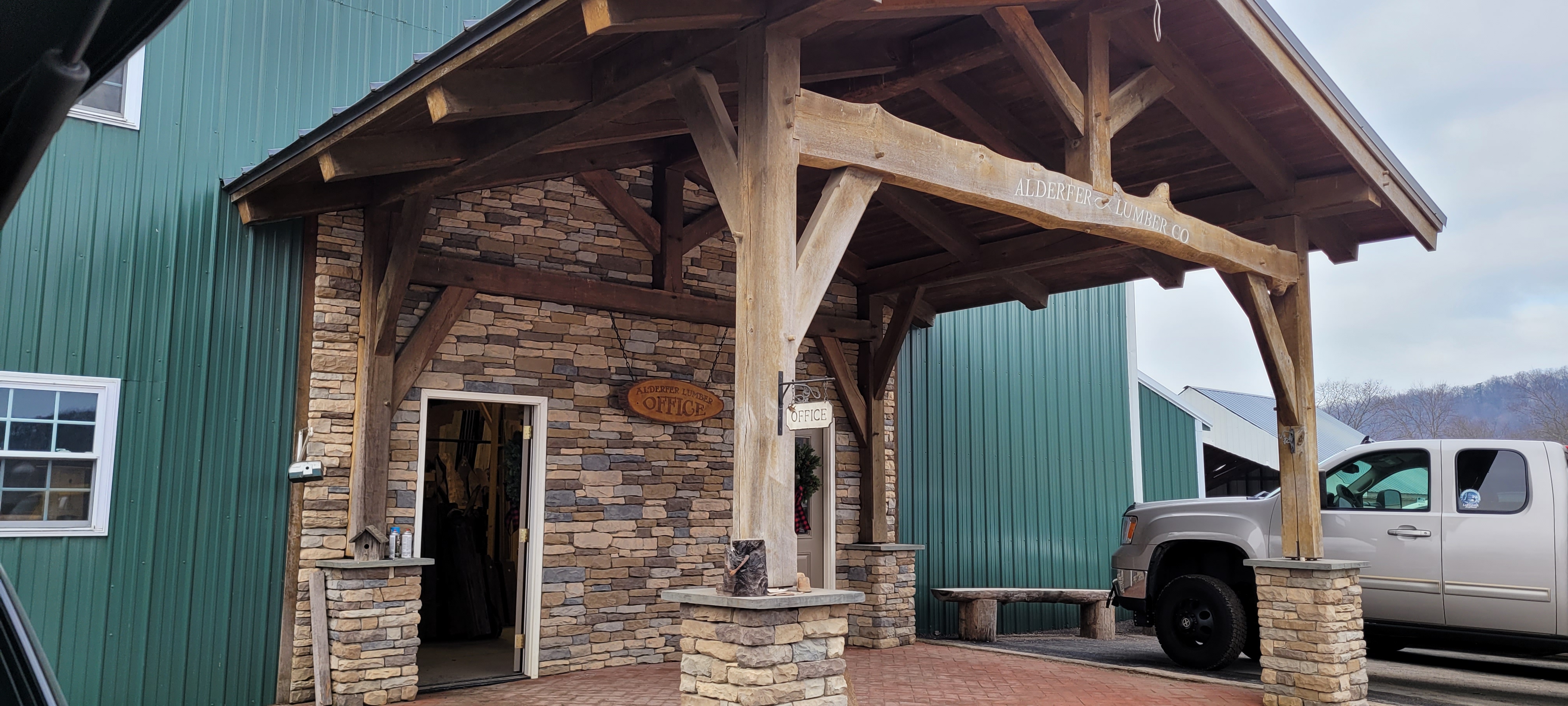
We made it to Central Pennsylvania — or, at least, I think it’s Central Pennsylvania. Maybe it’s a little East Central Pennsylvania. In any event, we hugged the Susquehanna River all the way up through Harrisburg and then about 45 minutes north to tiny little Mount Pleasant Mills, our destination to pick up the most glorious walnut wood. Well worth the trip. We couldn’t miss the opportunity to stop at an old timey Italian bakery in Harrisburg to pick up goodies before heading back from our day-long odyssey to find the perfect wood for our open shelving. Would definitely recommend this mill who sold us the wood, planed and cut it all to size for less than half of the $1,200 we received estimates for in DC.

Just in the (Saint) Nick of Time

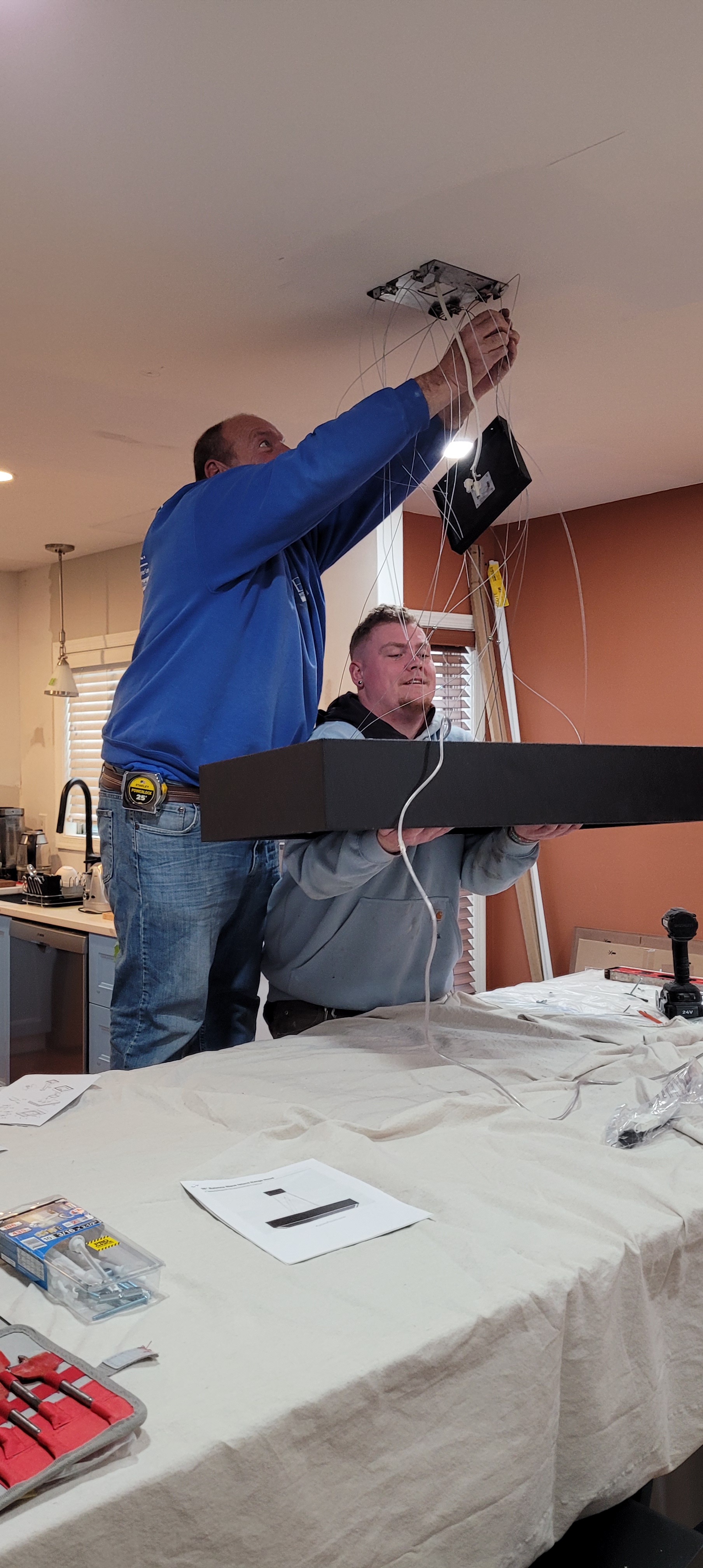
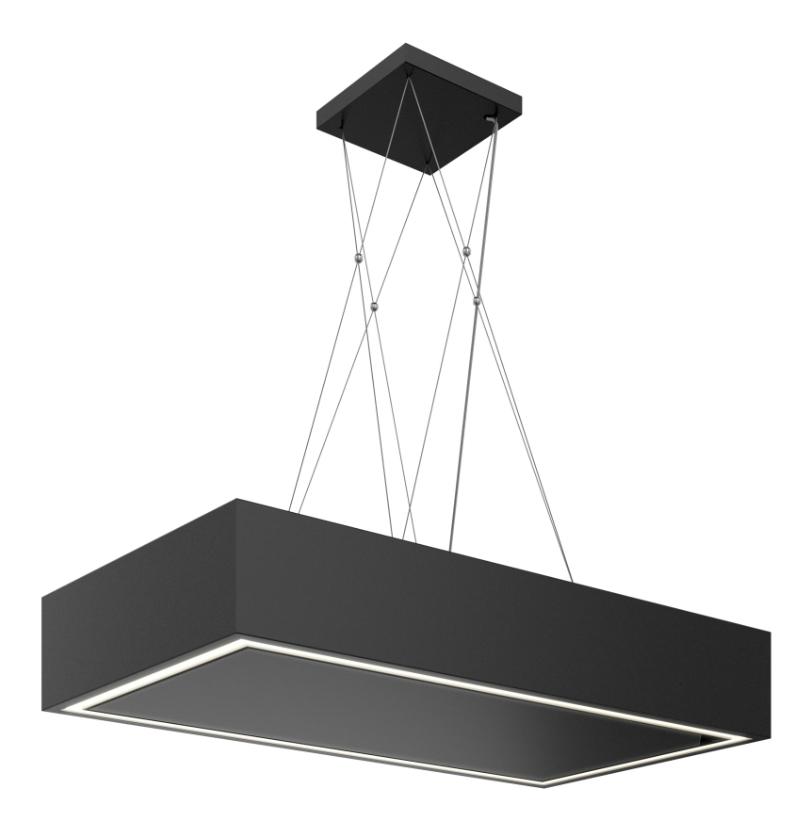
In other news, our hard-working contractor was here this morning to make sure we had a working oven for the Christmas weekend. They arrived in sleet and snow and finished the oven electrical and even put the range hood up! The hood still needs to be leveled, but because we aren’t having pendant lights, we thought this architectural feature would serve as both a rangehood and a futuristic pendant. Unironically from a company called Futuro Futuro. This is the “Balance” model — who doesn’t need more of that in your life?!

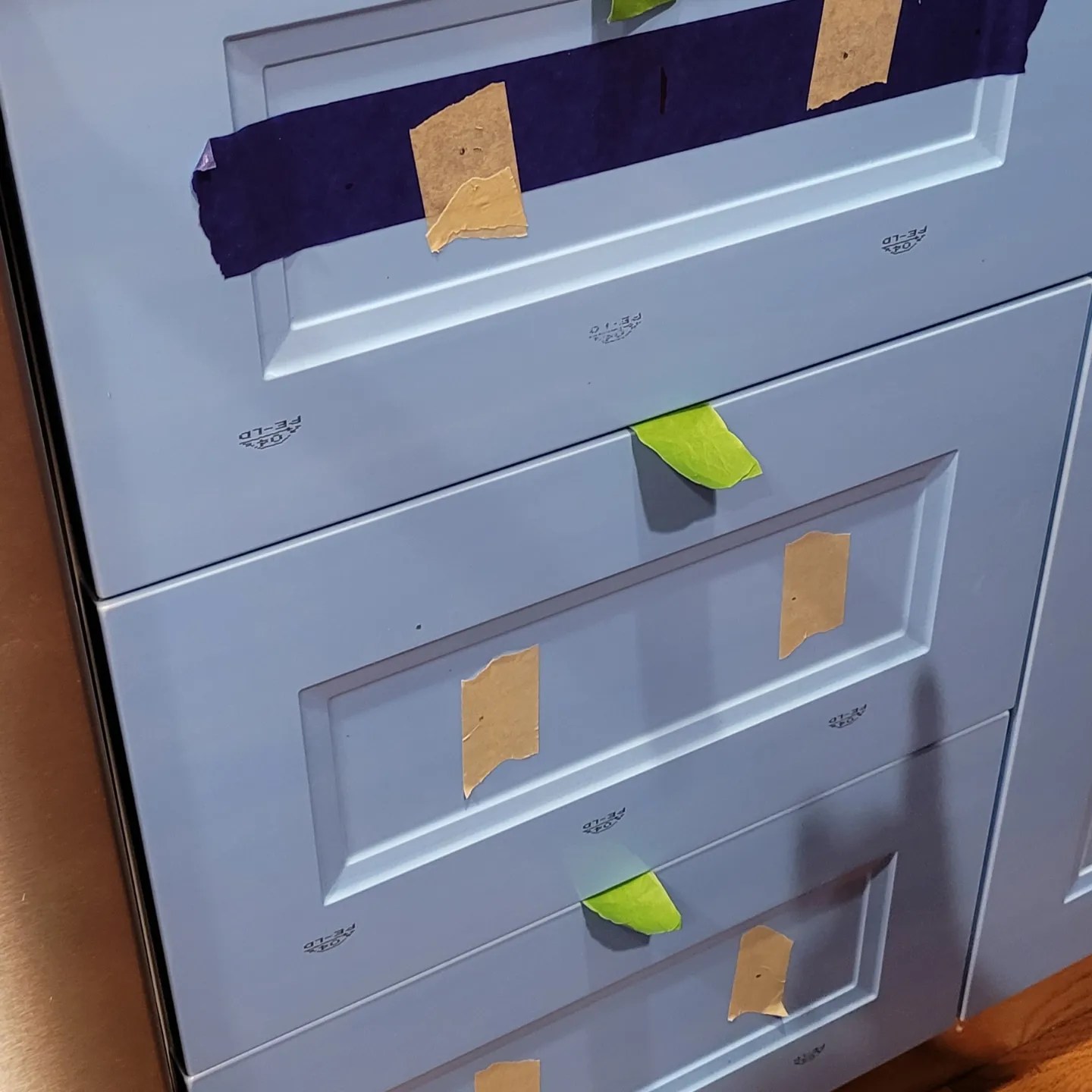
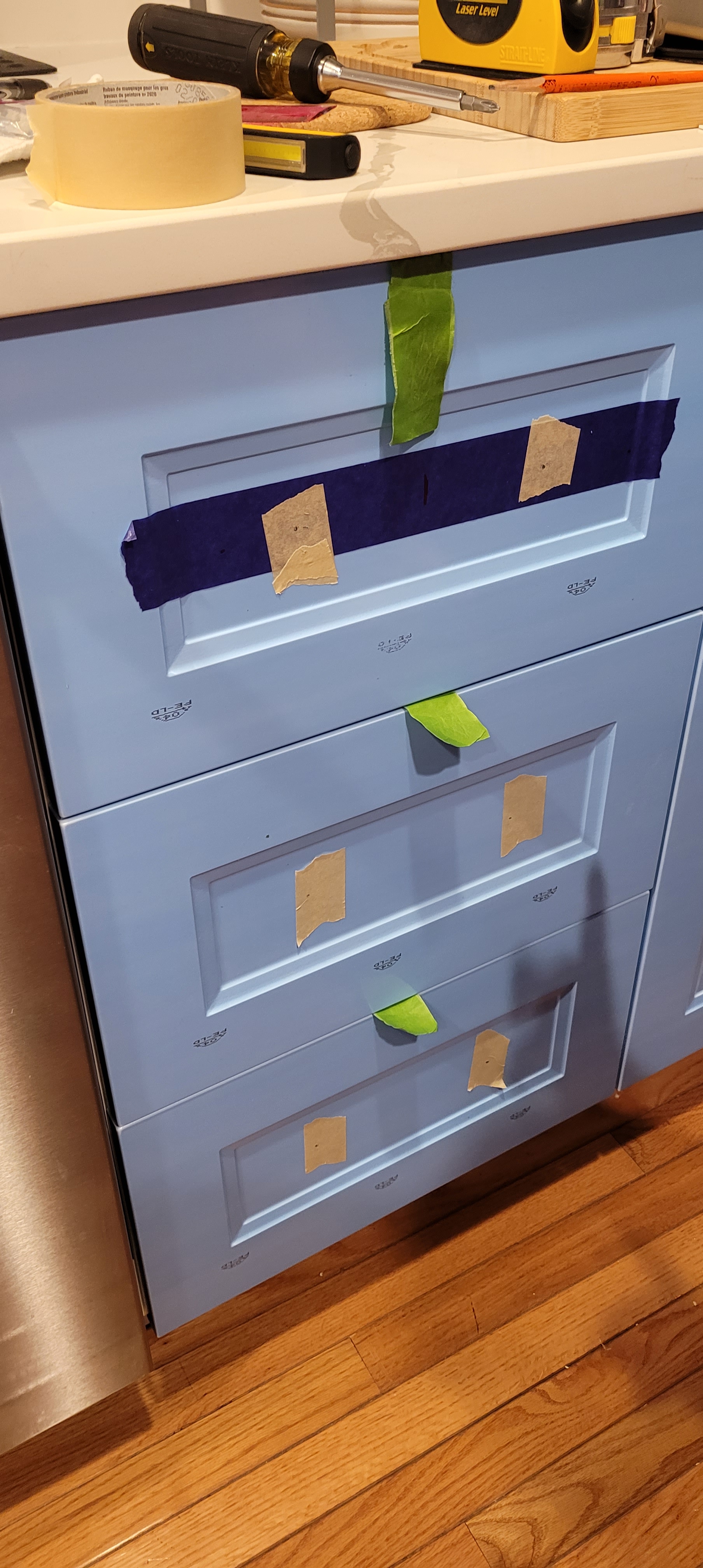
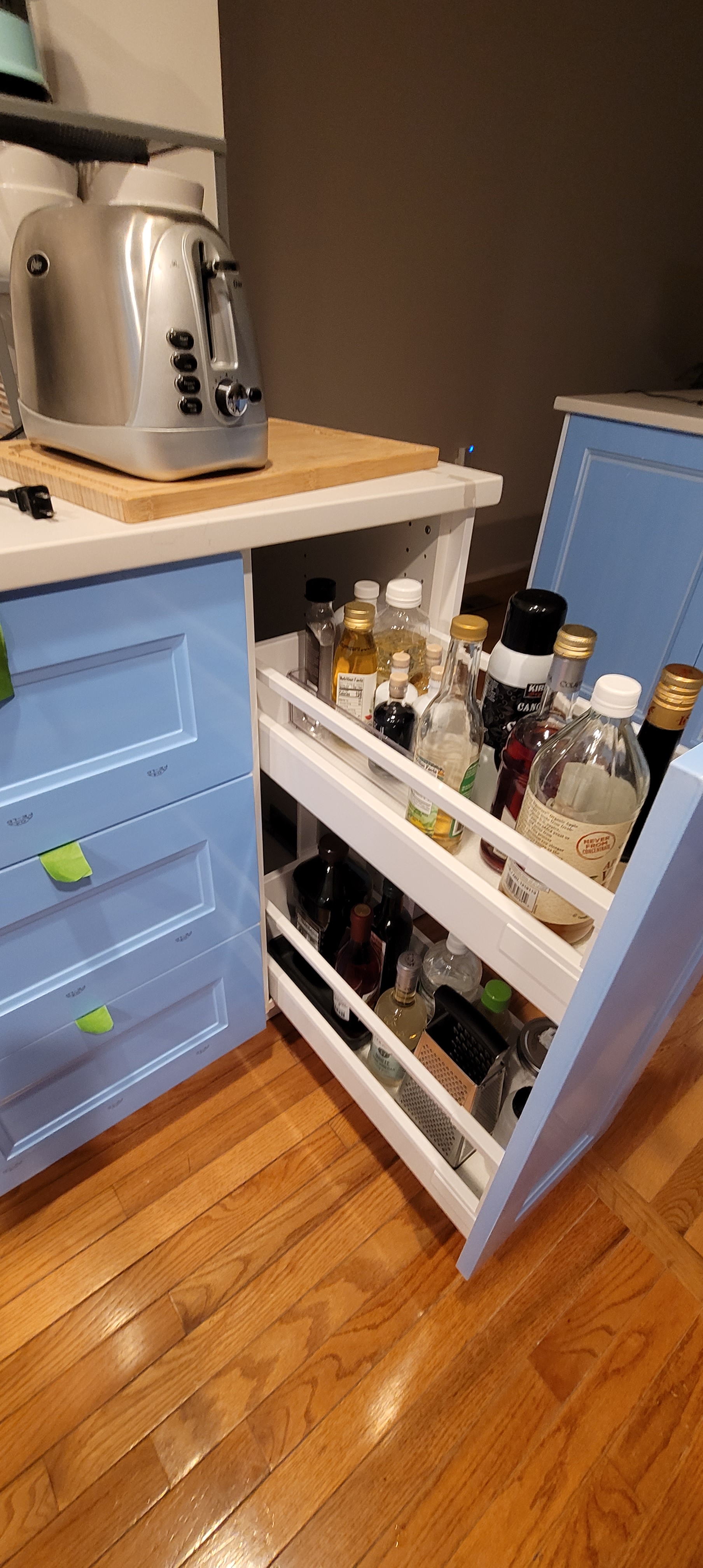
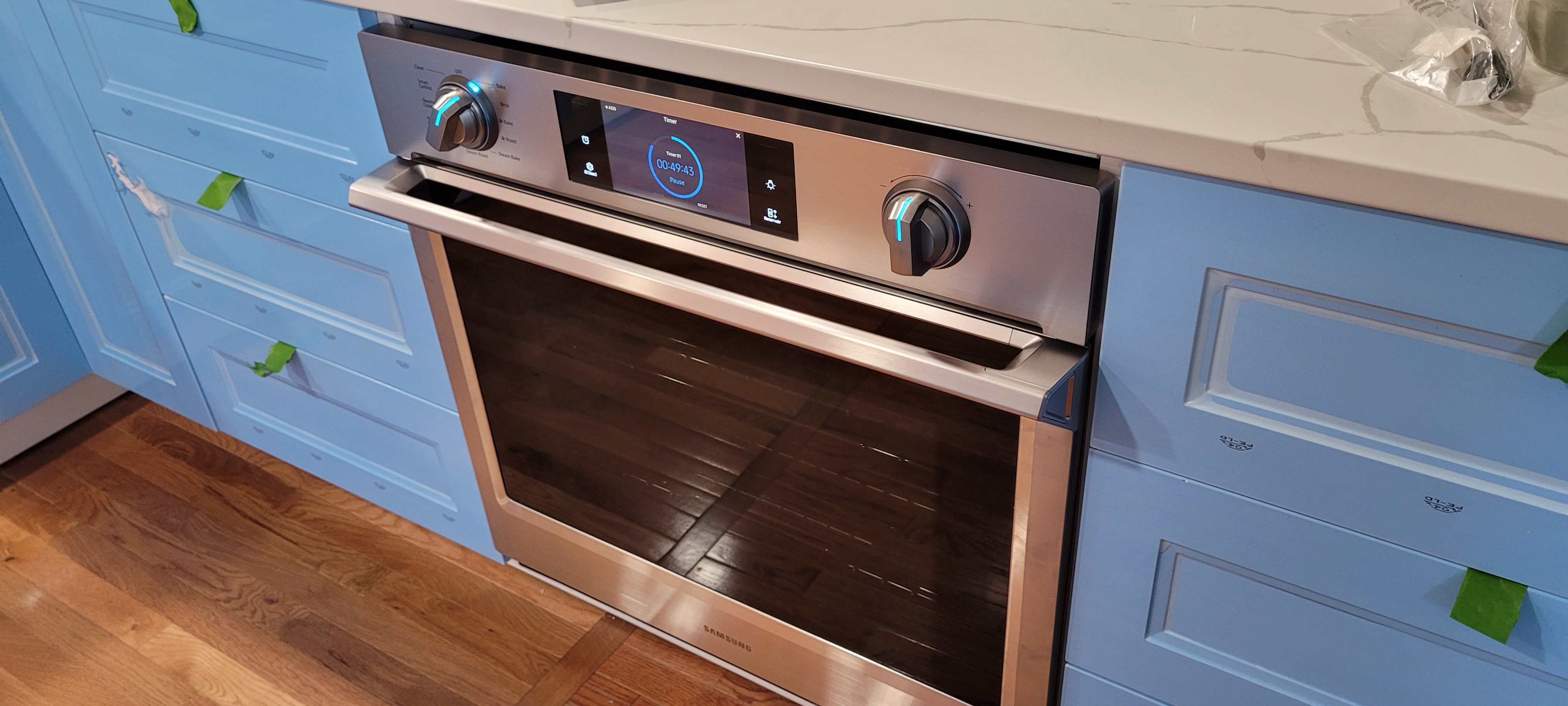
Had a lot of questions about the “bright blue” cabinet color. Nope, that color is just the outer protective plastic that we are leaving on until the messy stuff is over (grouting, painting, etc.) Rest assured, the cabinets will be classic white.

The Samsung Duo Flex oven also feels futuristic and could probably manage everything from cooking a meal to washing dishes and ironing clothes with all of its features.

We still have to paint, which happens on Monday, we have to trim everything, and then we can start tiling next week. Then we can finally remove the ugly blue cabinet coverings and attach the gorgeous cabinet hardware, which certainly beats green painters tape handles. A long way to go, but we have an oven!

kitchenremodel #kitchenrenovation